Arthur Schopenhauer Quotes
Will without intellect is the most vulgar and common thing in the world, possessed by every blockhead, who, in the gratification of his passions, shows the stuff of which he is made.
Schopenhauer, Arthur. The Art of Literature. Translated by T. Bailey Saunders, Swan Sonnenschein & Co., 1891, p. 97.


This is a common phenomenon in most democracies. There are 3 reasons that people vote against their interests. One is that they are fooled by the slickness of particular candidate and/or promises and assurances. Second, their cultural values are offended by the candidate who advocates and will fight for their interests. Third, they have been frightened sufficiently that they will sacrifice their interests if that will protect them. One frequent example is that in America in all wars, many people have voted for the candidate or party who would erode and/or deny their civil rights in the name of national security.


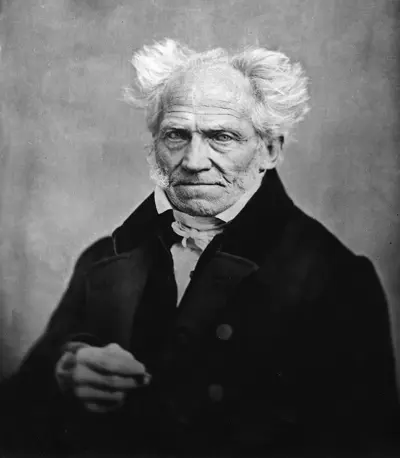
Arthur Schopenhauer was a German philosopher. He is best known for his 1818 work The World as Will and Representation (expanded in 1844), which characterizes the phenomenal world as the product of a blind and insatiable noumenal will. Building on the transcendental idealism of Immanuel Kant, Schopenhauer developed an atheistic metaphysical and ethical system that rejected the contemporaneous ideas of German idealism. He was among the first thinkers in Western philosophy to share and affirm significant tenets of Indian philosophy, such as asceticism, denial of the self, and the notion of the world-as-appearance. His work has been described as an exemplary manifestation of philosophical pessimism.
