Henry II Quotes
Will no one rid me of this turbulent priest?
Four of his Knights took him literally and murdered the Archbishop in his cathedral.
Henry II, 1133-1189, King of England, Statement referring to Archbishop of Canterbury Thomas Beckett, 1170
Sourced by: Eigen's Political and Historical Quotations


In September of 2005 a Danish Newspaper published some political cartoons showing the hypocrisy of some Muslims who use Islam to justify murder of innocents and terrorism. Months later, in January of 2006 many in the Middle East protested vehemently and Muslim fatal riots broke out because the Prophet Muhammad's visage was depicted against Islamic tradition. Many Muslim nations started a boycott against Denmark. Many Muslim leaders claimed that insulting religion was an “abuse” of freedom of speech including those from nations which regularly publish material that is virulent against Christians and Jews


This is a direct repudiation of the Christian doctrine. Ironically, it is the believe and behavior of must people who call themselves Christian. This was written under the name of Ragnar Redbeard. There are a few scholars who believe that it was written by Jack London, but most credit Desmond.


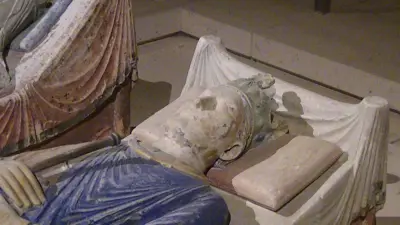
Henry II, also known as Henry Curtmantle (French: Court-manteau), Henry FitzEmpress or Henry Plantagenet, was King of England from 1154 until his death in 1189. He was the first king of the House of Plantagenet. King Louis VII of France made him Duke of Normandy in 1150. Henry became Count of Anjou and Maine upon the death of his father, Count Geoffrey V, in 1151. His marriage in 1152 to Eleanor of Aquitaine, whose marriage to Louis VII had recently been annulled, made him Duke of Aquitaine. He became Count of Nantes by treaty in 1185. Before he was 40 he controlled England, large parts of Wales, the eastern half of Ireland and the western half of France; an area that was later called the Angevin Empire. At various times, Henry also partially controlled Scotland, Wales and the Duchy of Brittany.
