Thomas Hobbes Quotes
The most frequent reason why men desire to hurt each other, ariseth hence, that many men at the same time have an Appetite to the same thing; which yet very often they can neither enjoy in common, nor yet divide it.
Thomas Hobbes, 1588-1679, English Political Philosopher, Philosophicall Rudiments Concerning Government and Society
Sourced by: Eigen's Political and Historical Quotations


She was also Australia’s First Woman Cabinet Minister.


Emerson’s complaint could easily be mistaken for a 21st century complaint about the degeneration of the political dialogue of the era. In reality, the higher minded political discourse were the exceptions in American and world politics.

This is a direct repudiation of the Christian doctrine. Ironically, it is the believe and behavior of must people who call themselves Christian. This was written under the name of Ragnar Redbeard. There are a few scholars who believe that it was written by Jack London, but most credit Desmond.


His idea was to send English people who were vagabonds, paupers, failures, and never do wells to America. These people in England were just “waste”. But in America, the could be apprenticed or become indentured servants, learn skill and they would (and indeed did) become the corps of laborers needed to cut down the trees, beat the hemp (for making rope), gather honey, salt and dry fish, dress raw animal hides, dig the earth for minerals, raise olives and silk, and sort and pack bird feathers. In England they were so desperate that they would work in the difficult conditions of the colonies and would be willing to venture out from the country and culture in which they existed—a major problem in getting colonial workers.

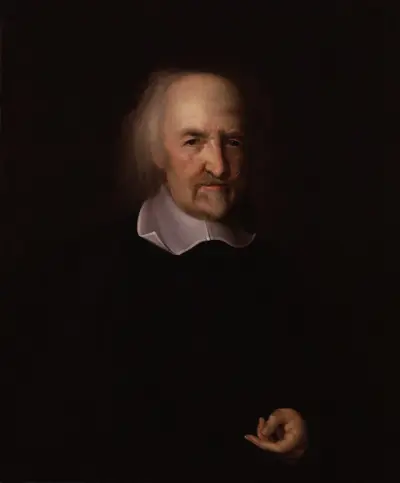
Thomas Hobbes was an English philosopher, considered to be one of the founders of modern political philosophy. Hobbes is best known for his 1651 book Leviathan, in which he expounds an influential formulation of social contract theory. In addition to political philosophy, Hobbes contributed to a diverse array of other fields, including history, jurisprudence, geometry, the physics of gases, theology, and ethics, as well as philosophy in general.
