Thomas Bailey Aldrich Quotes
Wide open and unguarded stand our gates, and through them presses a wild motley throng, men from the Volga and the Tartar steppes, featureless figures of the Hoang-Ho, Malayan, Scythian, Teuton, Kelt, and Slav. Flying the Old World's poverty and scorn, these bringing with them unknown gods and rites, Ttose, tiger passions, here to stretch their claws in street and alley. What strange tongues are loud accents of menace alien to our air, voices that once the Tower of Babel knew! O Liberty, white Goddess! Is it well to leave the gates unguarded?
Aldrich, Thomas Bailey. "Unguarded Gates." Unguarded Gates and Other Poems, Houghton, Mifflin and Company, 1895, pp. 13-14.


Bourne was one of the first writers with a national audience to question the classic but never real “melting pot” theory of immigration and suggest the “salad” model though he never used the term.


She was referring to the Muslim immigrants who were then coming into Europe in large numbers. Europe in general, and Italy in particular, have never had the American experience of assimilation of large numbers of immigrants, and many Muslims came to Europe just for the economic opportunities but did not like or respect the culture or the values. Some even preached hatred of the Christian West and fomented terrorism. This was different from America where Muslim immigrants arrived and despite the difficulties of new immigrants most thrived and were able to assimilate yet maintain their religion and cultural customs. At the same time many American Islamic immigrants represented the more modern Islamic which valued freedom and pluralism and unlike most Muslim nations of today, appreciated the advanced, modernistic, tolerant Islam of 1000 years ago when tolerance and freedom of thought within an Islamic framework made some Muslim countries the most advanced in the world.

Every refugee and immigrant group has had to provide the “value” to which he refers. Usually this has been in the form of labor or scientific-cultural skills.

See {635841} for a similar sentiment.

In revolutionary America, not only were the colonists divided into revolutionists and loyalists to Britain, but among the revolutionists, there was no uniformity of manners, ideas, norms, beliefs or any other element of politics and unity. The great challenge to America and one of its great strengths is its diversity which is not a consequence of recent immigration, but has been a characteristic of the American body politic even in the Revolutionary War. Even English was not spoken by everyone as there were French, German, Scandinavian and other immigrants who had settled in the frontier and rarely came into contact with people other than those of their own family and community. The notion of a specific American culture to which which some today believe that we should return, never existed to begin with.


Most immigration reformers want to open immigration more widely. Ward wanted immigration restricted to certain ethnicities and limited.


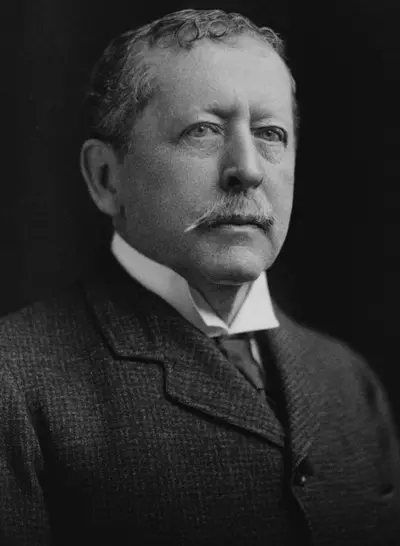
Thomas Bailey Aldrich was an American writer, poet, critic, and editor. He is notable for his long editorship of The Atlantic Monthly, during which he published writers including Charles W. Chesnutt. He was also known for his semi-autobiographical book The Story of a Bad Boy, which established the "bad boy's book" subgenre in nineteenth-century American literature, and for his poetry.
