George Washington Quotes
Why quit our own to stand upon foreign ground? Why, by interweaving our destiny with that of any part of Europe, entangle our peace and prosperity in the toils of European Ambition, Rivalship, Interest, Humour or Caprice?
Washington, George. "Farewell Address, 19 September 1796." The Papers of George Washington, Presidential Series, vol. 20, 1 April 1796–20 September 1796, edited by David R. Hoth and William M. Ferraro, University of Virginia Press, 2019, pp. 703-722.


Senator Burton was using this quotation to support the Republican isolation policy that they were advocating at the time. This quotation has been cited by almost every American politician advocating isolationism. Generally it was the Republican party that has been the isolationist advocates in America. However, after the Second World War that began to change, and in the beginning of the 21st century, the George W. Bush Administration, without any declaration of war by Congress, attacked and invaded two different countries starting the Iraq and the Afghanistan Wars. Meanwhile, the Democrats, who had been advocating American activism in foreign affairs also flip flopped and opposed foreign military intervention as Democratic President Obama withdrew American troops from the two Bush wars. The Afghanistan War was the longest war in American history.


Announcing his opposition to the covenant of a League of Nations:


Louis Napoleon had lead a military takeover or the French democratic republican government. The other great European powers, with the exception of England and Belgium at the time did not have parliaments or they were powerless and the countries were all monarchies with most of the monarchies and the aristocracy hateful of anything involving sharing their power with legislatures. This is despite the incredible success of England with its Constitutional Monarchy and Queen who was very pleased with it.


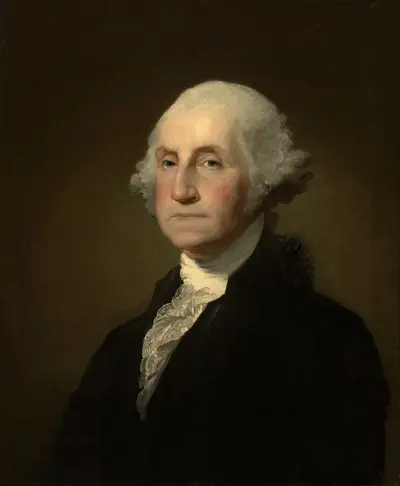
George Washington was the first President of the United States (1789-97), the Commander-in-Chief of the Continental Army during the American Revolutionary War, and one of the Founding Fathers of the United States. He presided over the convention that drafted the current United States Constitution and during his lifetime was called the "father of his country".
