Isabel Paterson Quotes
Whoever is fortunate enough to be an American citizen came into the greatest inheritance man has ever enjoyed. He has had the benefit of every heroic and intellectual effort men have made for many thousands of years, realized at last. If Americans should now turn back, submit again to slavery, it would be a betrayal so base the human race might better perish.
Paterson, Isabel. The God of the Machine. G. P. Putnam's Sons, 1943, p. 292.

Negotiations regarding the exchange of prisoners and property. This was his view of his supposed obligation to return Negro slaves who had escaped and gone to the British during the war. The treaty of peace specified that all “property” including slaves, taken by, the British be returned to the Americans. But he and other officers did not always do so as they thought they had higher moral obligations. See {621936} for example.

Johnson had a white mistress who accompanied him visibly at a time when Blacks were lynched for dating white women in many parts of the country. He was criticized heavily by whites for going with a white woman and many Blacks for the same.

The issue of slavery which had been suppressed in Congress for the first decades of the nation broke out when Missouri statehood was considered. By previous agreement, slavery was not even discussed in Congress but the time period elapsed. Tallmadge not only proposed that no more slaves could come into Missouri {613176} but most shocking to the Southerners was that every person born in the new state would be free at the age of 25. In a generation, there would be no more slavery in Missouri and there would be no economic compensation for slave owners at all. The House of Representatives accepted the amendment, but it failed in the Senate. At that time, Senators were not elected by voters but were appointed by the state legislators and the Southern slave states had a disproportionate share of the senate from a population point of view. But what this quotation shows clearly that a majority of the country in 1819 were opposed to slavery and were willing to end it without compensation.


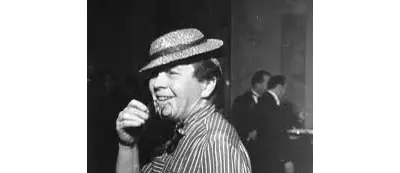
Isabel Paterson was a Canadian-American journalist, novelist, political philosopher, and a leading literary and cultural critic of her day. Historian Jim Powell has called Paterson one of the three founding mothers of American libertarianism, along with Rose Wilder Lane and Ayn Rand, who both acknowledged an intellectual debt to Paterson. Paterson's best-known work, The God of the Machine (1943), a treatise on political philosophy, economics, and history, reached conclusions and espoused beliefs that many libertarians credit as a foundation of their philosophy. Her biographer Stephen D. Cox (2004) believes Paterson was the "earliest progenitor of libertarianism as we know it today." In a letter of 1943, Rand wrote that "The God of the Machine is a document that could literally save the world ... The God of the Machine does for capitalism what Das Kapital does for the Reds and what the Bible did for Christianity."
