Napoleon Bonaparte Quotes
Who saves his country violates no law.
Bonaparte, Napoleon. Maximes et Pensées du Prisonnier de Sainte-Hélène. L'Huillier, 1820, p. 75.


Joseph Addison had earlier written of such a situation. Recent research has strongly suggested that Hale may never have said these words. The American patriots wanted to have heroes and may not have been too worried about the documentation and historical research. See {621112}


His wife also had a Doctorate in Chemistry—the 2nd woman to achieve that in Germany—and she was distraught that he had been the leading scientist developing not only the poison gas which the Germans introduced in WWI, but he also developed the tactics of use and personally went to the battlefield and supervised the first major gas attacks. This was much against the ethical value of most scientists and Jewish ethics in particular. Haber had been a close colleague of Albert Einstein and the Kaiser Wilhelm Institute, and while Einstein was trying to get scientists to sign a petition against the war, Haber was developing the first weapon of mass destruction. After Haber gave this response to his wife, we left to go to the front to supervise another major gas attack. His wife committed suicide. Haber, while a German national hero to militaristic Germany, never again had the kind of pre-war relationship that existed with Einstein and many other fellow scientists.


Saloth Sar Pol Pot. He was responsible for the brutal killing of over 1 million of his own people.


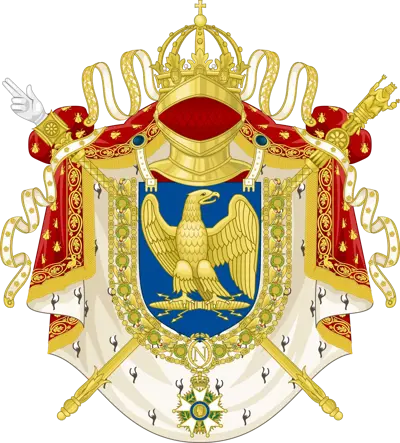
Napoléon Bonaparte was a French military and political leader of Corsican descent. He rose to prominence during the French Revolution and led several successful campaigns during the Revolutionary Wars. As Napoleon I, he was Emperor of the French from 1804 until 1814, and again in 1815. Napoleon dominated European and global affairs for more than a decade while leading France against a series of coalitions in the Napoleonic Wars. He won most of these wars and the vast majority of his battles, building a large empire that ruled over continental Europe before its final collapse in 1815. One of the greatest commanders in history, his wars and campaigns are studied at military schools worldwide. He remains one of the most celebrated and controversial political figures in human history.
