Alexander Pope Quotes
What bosom beast not in his country's cause?
Pope, Alexander. "Prologue." Cato. A Tragedy, by Joseph Addison, J. Tonson, 1713, p. vi.


Quintus Horatius Flaccus. This famous quotation has been echoed in virtually every language and every country of the world. However, see Ernest Hemingway for a counter view.


Quintus Horatius Flaccus

Ataturk was a young major at the time commanding troops of a weak and corrupt Ottoman regime. However a combined English and French (the strongest military powers in Europe) invasion of the Gallipoli Peninsula threatened to capture the Turkish capital, Constantinople. Ataturk alone rallied the Turkish defenders and fought the invaders to a standoff in long drawn out battle with huge casualties on both sides. Ataturk became a national hero. Although Ataturk thereafter was very reluctant to use military force or endanger troops, the thing he always thought worth the supreme sacrifice (including his own) was the independence and sovereignty of the nation. See {584502} for his continuing belief in this type of sacrifice.


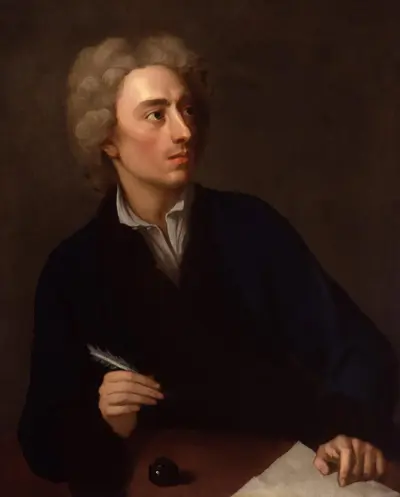
Alexander Pope is seen as one of the greatest English poets and the foremost poet of the early 18th century. He is best known for satirical and discursive poetry, including The Rape of the Lock, The Dunciad, and An Essay on Criticism, and for his translation of Homer. After Shakespeare, Pope is the second-most quoted writer in English, according to The Oxford Dictionary of Quotations, some of his verses having become popular in common parlance (e. g., damning with faint praise). He is considered a master of the heroic couplet.
