George S. Patton Quotes
If you can't get them to salute when they should salute and wear the clothes you tell them to wear, how are you going to get them to die for their country?
D'Este, Carlo. Patton: A Genius for War. HarperCollins, 1995, p. 453.


Ataturk was a young major at the time commanding troops of a weak and corrupt Ottoman regime. However a combined English and French (the strongest military powers in Europe) invasion of the Gallipoli Peninsula threatened to capture the Turkish capital, Constantinople. Ataturk alone rallied the Turkish defenders and fought the invaders to a standoff in long drawn out battle with huge casualties on both sides. Ataturk became a national hero. Although Ataturk thereafter was very reluctant to use military force or endanger troops, the thing he always thought worth the supreme sacrifice (including his own) was the independence and sovereignty of the nation. See {584502} for his continuing belief in this type of sacrifice.


Miles, a hero of the Indian Campaigns (although he led the atrocities at the massacre at Wounded Knee) and then the leading military figure in America was an opponent of the policies of the new young President and had political aspirations of his own for the Presidency. Miles’ opinions were printed in the press. He maintained that he was not speaking as the Commanding General of the Army but personally as a citizen. The President surprised almost all by publicly scolding and reprimanding Miles when he next came to the White House. Five days later Roosevelt made the reprimand official, effectively ending Miles career. The issue of when senior military officers can criticize the administration has been debated ever since. Roosevelt was also a war hero himself, and although the military was shocked by such “savage” treatment of a senior officer, the President had public opinion on his side. Every decade or so there is a military official who does not care for the administration’s policies and expresses himself publicly. President Truman’s firing to General Douglas Macarthur was the most dramatic case, but Truman was well aware of the Miles and TR precedent.

Recipient of the National Security Medal


In Pakistan, the civilian governments were not in control of the army who would have their own polices, foreign and domestic. When the head of the Army assumed the Presidency in a coup, he approached the Prime Minister of India—the Pakistan traditional enemy—and assured him that unlike with the civilian governments, he could negotiate for the country. Ironically, Prime Minister Manmohan Singh disclosed this quotation after Pervez Musharraf was deposed and democracy and civilian government returned to Pakistan. However the Indian Prime Minister then complained that there was no one to negotiate with as the civilian elected prime minister could not speak for the army—still the major power in Pakistan.

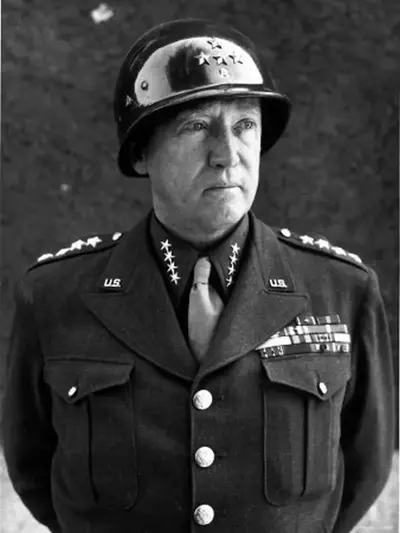
George Smith Patton Jr. was a general in the United States Army who commanded the Seventh United States Army in the Mediterranean theater of World War II, and the Third United States Army in France and Germany after the Allied invasion of Normandy in June 1944.
