Camillo di Cavour Quotes
What scoundrels we would be if we did for ourselves what we are ready to do for Italy.
Mack Smith, Denis. Cavour. Alfred A. Knopf, 1985.


This may be Kennedy’s most famous line. However he was not the first orator to express this idea however. See Khalil Gibran {601423}, Warren G. Harding {622594} and {629021}, St. John Broderick {595734}, and Oliver Wendell Holmes Jr. {603707} for earlier expressions of similar sentiments. Holmes seems to be the first to express the idea while the earliest seems similar phraseology seems to be the British Politician St. John Broderick in 1893 {595734}. Although, these earlier expressions existed, Theodore C. Sorensen, who assisted Kennedy with this speech and wrote the draft, had distilled it from earlier expressions and views of JFK and said that these were Kennedy’s words. At the time, he stated that was unaware of the Gibran, Harding, Broderick and Holmes sentiments. Gibran had not yet even been translated into English. However it is not clear whether Kennedy himself had inadvertently recollected the phrase from any of the other quotations. (The question was never put to him.) The St. John Broderick quotation is a possible source. Kennedy was quite familiar with British political history, and his father and been U. S. Ambassador to Great Britain. Regardless, the quotation was as great for the place and timing—his inaugural—as it was for the phraseology which might have originated elsewhere.


His wife also had a Doctorate in Chemistry—the 2nd woman to achieve that in Germany—and she was distraught that he had been the leading scientist developing not only the poison gas which the Germans introduced in WWI, but he also developed the tactics of use and personally went to the battlefield and supervised the first major gas attacks. This was much against the ethical value of most scientists and Jewish ethics in particular. Haber had been a close colleague of Albert Einstein and the Kaiser Wilhelm Institute, and while Einstein was trying to get scientists to sign a petition against the war, Haber was developing the first weapon of mass destruction. After Haber gave this response to his wife, we left to go to the front to supervise another major gas attack. His wife committed suicide. Haber, while a German national hero to militaristic Germany, never again had the kind of pre-war relationship that existed with Einstein and many other fellow scientists.


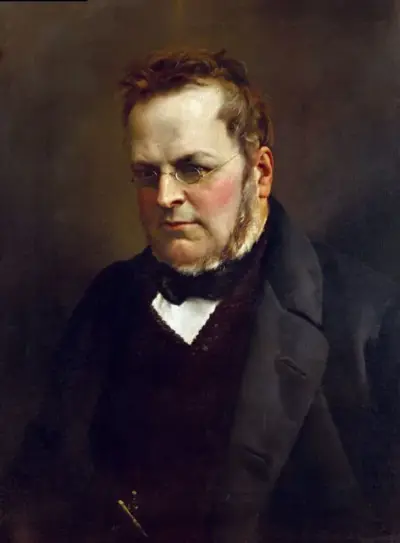
Camillo Paolo Filippo Giulio Benso, Count of Cavour, Isolabella and Leri, generally known as Cavour (/kəˈvʊər/ kə-VOOR, Italian: [kaˈvur]), was an Italian statesman and a leading figure in the movement towards Italian unification. He was one of the leaders of the Historical Right, and Prime Minister of the Kingdom of Piedmont–Sardinia, a position he maintained (except for a six-month resignation) throughout the Second Italian War of Independence and Giuseppe Garibaldi's campaigns to unite Italy. After the declaration of a united Kingdom of Italy, Cavour took office as the first Prime Minister of Italy; he died after only three months in office, and thus did not live to see Venetia or Rome added to the new Italian nation.
