Mao Zedong Quotes
Who are our enemies? Who are our friends? This is a question of the first importance for the revolution.
Mao, Zedong. "Analysis of the Classes in Chinese Society." Selected Works of Mao Tse-tung, vol. 1, Foreign Languages Press, 1965, p. 13.

The letter was widely published. There were few left wing intellectuals who would take Lenin on at the time but Gorter was one. The immediate quotation shredded a brochure that Lenin had produced for world wide communism where he was critical of other left wing movements.


Ideologues often use the tactic of opposing everything the government does—even if they would support it intellectually. The main issue for them was to win the class warfare, and the move to that end by never giving the government credit for anything or sharing power or cooperating in any way. This is not just a tactic of the left. The Tea Party Conservative Republicans adopted the same tactics with the Barack Obama Democratic Administration.

The reason that this quotation is important is that most Americans from the 1920s on concerned with Marxism and communism in the United States, conflated Marxism with Anarchists as if Marxists were anarchists who were bent on violence. In reality, to most Marxists, anarchists were more their enemy than the capitalists. Stalin was then only 28 years old and the Russian revolution was 9 years in the future.


This quotation is very critical to people interested in the Libertarian party and libertarian movements. Although she literally “loathed” the libertarians of the day, almost all modern libertarians credit the modern libertarian movement have not only started with her but even into the 21st century she is acknowledged to be the largest intellectual force of libertarianism. Actually, she was a very strong person with very firm ideas, and she was criticized by some people who called themselves libertarian and did not follow her philosophy of individual responsibility and liberty. Her reaction was not only to avoid identifying with them but to differentiate herself whenever she could.


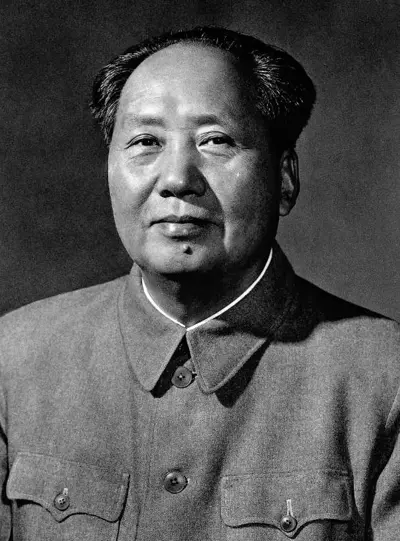
Mao Zedong, also known as Chairman Mao, was a Chinese communist revolutionary who was the founder of the People's Republic of China (PRC), which he ruled as the chairman of the Chinese Communist Party from its establishment in 1949 until his death in 1976. Ideologically a Marxist–Leninist, his theories, military strategies, and political policies are collectively known as Maoism.
