John Paul Stevens Quotes
While money is used to finance speech, money is not speech.
Stevens, John Paul. Citizens United v. Federal Election Commission, 558 U.S. 310, Supreme Court of the United States, 21 Jan. 2010.


conservative justices in the majority McCain held this view despite the fact that most other politicians applauded the decision since the large, wealthy corporations tended to support Republicans.

Abrams had a long track record of defending the 1st Amendment that he was generally perceived as a liberal. However, he was the winning Attorney for Citizens United where the Suprme Court ruled 5-4 that spending money on campaigns was a form of speech and the government may not regulate the amount of speech (money) for a corporation of a person.


Morello had served on the Staff of Senator Alan Cranston (Democrat, CA)


The reference is to "symbolic speech" such as flag burning.


In Lincoln’s age there was a serious ethical debate as to whether it was right for a candidate to use any money at all in a campaign regardless of source.

The “old man” was their father, Joseph P. Kennedy who was a very wealthy businessman, but an unsavory figure. He had made much of his money in bootlegging and smuggling, and although married, carried on notorious affairs with movie stars. When he had the opportunity to serve the country in a critical post, he supported Hitler and the Fascists and fought to keep America from assisting England in WWII. President Roosevelt fired him, and President Harry Truman literally came to blows with Kennedy. JFK wanted his father’s money, but didn’t want him anywhere near the campaign. Most people who voted for Kennedy, had no idea that his father was on the Fascist side in WWII. Ironically, JFK was a hero who fought against the fascists and his older brother was killed in Europe on a secret mission against Germany. The elder Kennedy accused President Roosevelt of ‘murdering” his son in a useless war.
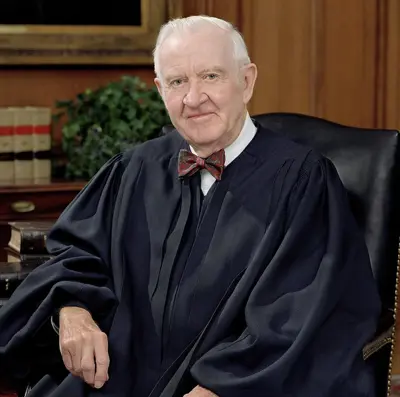
John Paul Stevens was an American lawyer and jurist who served as an associate justice of the United States Supreme Court from 1975 until his voluntary retirement in 2010. At the time of his retirement, he was the second-oldest-serving justice in the history of the court and the third-longest-serving justice. At the time of his death, he was the longest lived Supreme Court justice ever. His long tenure saw him write for the court on most issues of American law, including civil liberties, death penalty, government action and intellectual property. In cases involving presidents of the United States, he wrote for the court that they were to be held accountable under American law. A registered Republican when appointed who throughout his life identified as a conservative, Stevens was considered to have been on the liberal side of the court at the time of his retirement.
