Floyd Abrams Quotes
We have had a continuing problem of the equality of wealth and the power that goes with it. There are other ways of curtailing the power of corporations…. Congress is at fault for not requiring full disclosure of political contributions… Speech is the last thing we should be curtailing.
Abrams had a long track record of defending the 1st Amendment that he was generally perceived as a liberal. However, he was the winning Attorney for Citizens United where the Suprme Court ruled 5-4 that spending money on campaigns was a form of speech and the government may not regulate the amount of speech (money) for a corporation of a person.
Floyd Abrams, Attorney, Interview, WAMU The Diane Rehm Show, June 11, 2013
Sourced by: Eigen's Political and Historical Quotations

Not only both parties agreed on the evil of corporate money in politics, but there was not even a single dissent on this point. Also, the President was in agreement {634816}. A century later, there were only a handful of senators who did not think that corporate money was critical in politics. This was a flip flop for BOTH major parties.


Of all the inequalities that existed in society, the easiest one to overcome with effort is wealth. Race, blood, parentage, even education are not as easily overcome. Of all the inequalities, traditionally Americans have been least offended by that of wealth under the theory that with current effort that can often be overcome. It is only in the latter part of the 20th century where modern economics and sociology have shown that wealth inequality itself is also difficult to overcome, that money as a societal leveler has been conceptually diminished. Sedgwick was the first American to identify the phenomenon that had operated in early America.


In modern America, there are two political views of this notion. The one held by a small majority of the population is Trenchard’s quotation taken literally. Their view is that there if the is no way to maintain liberty if there is too wide a gap between the rich and the rest of the population. The second variant, held by many conservatives limits the equality to equality of opportunity. They are loathe to take any position that says that any gap between the rich and the remainder of the citizens might be too large. They would particularly disagree with the first sentence of another Trenchard quotation, {627024}.


conservative justices in the majority McCain held this view despite the fact that most other politicians applauded the decision since the large, wealthy corporations tended to support Republicans.


At the time this was a very widely held, bipartisan view. See {634818} . Given statements like this, TR if he were alive today would never be able to get the Republican Nomination for President; nor could he obtain the Democratic Nomination because of his view on the military, expansionism, defense spending and war.

The President had decided to aggressively push for railroad regulation to end the rate rebate abuses that were used to support the monopolies like Standard Oil. In vintage Roosevelt tactics, he gave his first major speech on the subject in the setting and forum that would be most opposed to it. The Union League Club of Philadelphia in included the wealthiest men in the area where were most opposed to any Federal Regulation of anything. All the major railroad executives and stock owners and traders were also members. The President wanted to persuade the opponents to change their positions, and sometimes he did. He also was driven by his concept of sports and athletics so that the “opposition” should have “fair notice” for the contest ahead.


The Citizens United case held that it was unconstitutional to limit the amount of money that corporations could spend political campaigns.

Worry about the disproportional power of the rich is not a modern concern, but was a concern from the very beginning of the nation. There was a belief that if there were a legislative body representing the entire population the rich would tend to dominate it. The solution that England had found was a bicameral Parliament—a House of Lords representing the wealthy and the powerful and the House of Commons, representing the bulk of the people. America followed suit but never did have the class distinction of England.

Often called Blackshirts


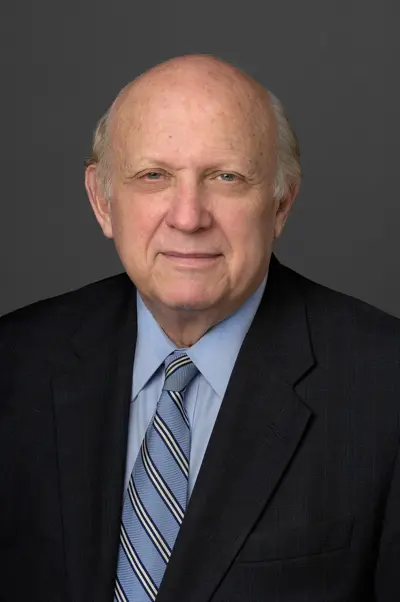
Floyd Abrams is an American attorney at Cahill Gordon & Reindel. He is an expert on constitutional law, and has argued 13 cases before the Supreme Court of the United States. Many of the arguments in briefs he has written have been adopted as United States Constitutional interpretative law as it relates to the First Amendment and free speech.
