John Paul Stevens Quotes
At a time when concerns about the conduct of judicial elections have reached a fever pitch, the court today unleashes the floodgates of corporate and union general treasury spending in these races.
The Supreme court ruled that monetary campaign contributions were a form of political speech and as such could not be limited. The result was that the richest people and the largest corporations could pay any politician any amount of money if the called it a campaign contribution. Under the Congressional rules at the time there were ways that the so called campaign contributions could be used for the legislator’s personal and family benefit and when members of Congress retired there were ways that they could take their “unspent” campaign funds with them for personal use. The resultant system was what Senator McCain called “bribery”, which before the Supreme Court rendered this decision was a felony. That which had been unethical and criminal became legal.
John Paul Stevens, U. S. Supreme Court Justice, Dissent, Citizens United v. Federal Election Commission, 2010
Sourced by: Eigen's Political and Historical Quotations


The Citizens United case held that it was unconstitutional to limit the amount of money that corporations could spend political campaigns.


conservative justices in the majority McCain held this view despite the fact that most other politicians applauded the decision since the large, wealthy corporations tended to support Republicans.


This is a very clever analogy to an aspect of astronomy and physics. Most of the mass in the universe is dark matter which is invisible to human sensors and instruments and hence cannot be seen. Yet they have the most gravitational effect on matter that can be seen.

At the time this was a very widely held, bipartisan view. See {634818} . Given statements like this, TR if he were alive today would never be able to get the Republican Nomination for President; nor could he obtain the Democratic Nomination because of his view on the military, expansionism, defense spending and war.


Not only both parties agreed on the evil of corporate money in politics, but there was not even a single dissent on this point. Also, the President was in agreement {634816}. A century later, there were only a handful of senators who did not think that corporate money was critical in politics. This was a flip flop for BOTH major parties.

He had been serving as a University President. One change was the unlimited corporate funds that could then be donated to campaigns by corporations. “Super-Pacs” were one of these vehicles. Kerrey refused to use them. His opponent did not. His opponent was able to spend much more money on his campaign. Kerrey lost.


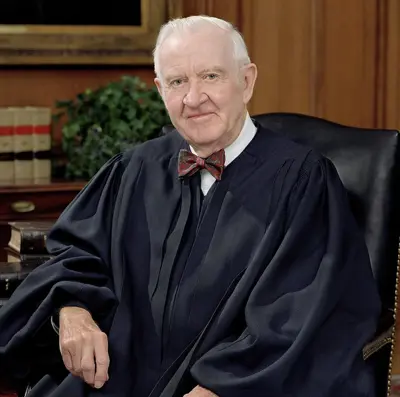
John Paul Stevens was an American lawyer and jurist who served as an associate justice of the United States Supreme Court from 1975 until his voluntary retirement in 2010. At the time of his retirement, he was the second-oldest-serving justice in the history of the court and the third-longest-serving justice. At the time of his death, he was the longest lived Supreme Court justice ever. His long tenure saw him write for the court on most issues of American law, including civil liberties, death penalty, government action and intellectual property. In cases involving presidents of the United States, he wrote for the court that they were to be held accountable under American law. A registered Republican when appointed who throughout his life identified as a conservative, Stevens was considered to have been on the liberal side of the court at the time of his retirement.
