Witold Gombrowicz Quotes
Wherever I see some mystique, be it virtue or family, faith or fatherland, there I must commit some indecent act.
Gombrowicz, Witold. Diary. Translated by Lillian Vallee, Yale University Press, 2012.


This is a modern summary of the philosophy of Benedict Spinoza who developed the modern philosophical foundation of science and scientific thinking. When the authorities are clerics and religious leaders, their authority gets undermined which is why the Jews, Christians, and Muslims all excommunicated Spinoza. For the scientists, they themselves are to be rejected as determiners of knowledge and truth so they tend to do poorly in political disputes because the good scientists would never assert a belief that the politicians should listen to them just because they are great scientists and they “know.” It is the ideologues and junk scientists who are sure of their testimony and can advise with certainty. See linked quote(s).

Alvarez was one of the key physicists who developed the atom bomb and was the scientist selected to accompany the plane bombing Hiroshima. There was considerable friction in the Manhattan Project development of the bomb between the scientists and the military.

3rd Earl Russell of Kingston. He arrives at the same place as Spinoza did in the 17th century although his reasons are different.


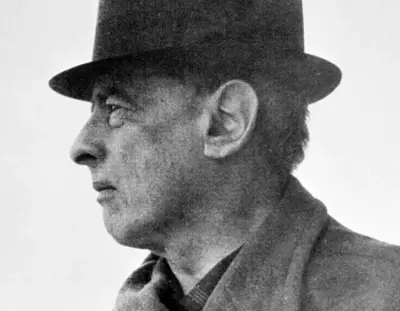
Witold Marian Gombrowicz was a Polish writer and playwright. His works are characterised by deep psychological analysis, a certain sense of paradox and absurd, anti-nationalist flavor. In 1937 he published his first novel, Ferdydurke, which presented many of his usual themes: problems of immaturity and youth, creation of identity in interactions with others, and an ironic, critical examination of class roles in Polish society and culture. He gained fame only during the last years of his life, but is now considered one of the foremost figures of Polish literature. His diaries were published in 1969 and are, according to the Paris Review, "widely considered his masterpiece". He was nominated for the Nobel Prize in Literature in 1966.
