LUIS WALTER ALVAREZ
(Luis Alvarez)
This is a very material quotation with regard to Congress creating science-related policies and legislation. The members of Congress know the least about scientific matters than almost anything else that they have to legislate about. So typically they rely on scientific experts. Scientists are witnesses at Congressional hearings and often the political, polarized staff arrange to have scientists who disagree in something. They both have PhDs in the field, but one may be a great scientists and the other, a lightweight. This is where Alverez’s point becomes so critical. The Congress and staff have to learn how to differentiate between a “second rater” or a “Fermi” one of the great physicists of all time.
He was describing the impact of a huge asteroid that struck Earth at what is now the Mexican town of Chicxulub—65 million years ago. This cataclysmic event, he believed, in addition to destroying most life in what is now Mexica and the United States, the impact changed the entire earth, wiping out the dinosaurs and most other large mammals. The asteroid was 6 miles in diameter but struck at such a high speed that the energy had this colossal effect. The crater is referred to as the Chicxulub Crater.
Alvarez was one of the key physicists who developed the atom bomb and was the scientist selected to accompany the plane bombing Hiroshima. There was considerable friction in the Manhattan Project development of the bomb between the scientists and the military.
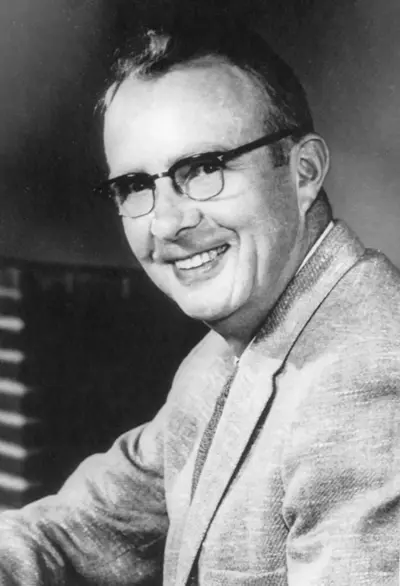
Luis Walter Alvarez was an American experimental physicist, inventor, and professor who was awarded the Nobel Prize in Physics in 1968 for development of the hydrogen bubble chamber enabling discovery of resonance states in particle physics. The American Journal of Physics commented, "Luis Alvarez was one of the most brilliant and productive experimental physicists of the twentieth century."
