Charles IV Quotes
Whenever, and so often as in future, necessity or occasion shall arise for the election of a king of the Romans and prospective emperor and the prince electors, according to ancient and laudable custom, are obliged to journey to such election, each prince elector, if, and whenever, he is called upon to do this, shall be bound to escort any of his fellow prince electors or the envoys whom they shall send to this election through his lands, territories and districts, and even as much beyond them as he shall be able; and to lend them escort without guile on their way to the city in which such election is to be held, and also in returning from it.
When there were elections, sometimes a prince elector, would “arrange” to have a foreign prince elector delayed so as to miss the voting if there were of a different faction or supported a different candidate and the elector had to pass through his lands. Worse, occasionally, “bandits” would assault an elector and sometimes kill him. Most nations which have elections have laws and procedures to prevent opposing factions from interfering with the representative’s travel to the place of election. This is one of the first in Christian Europe.
Charles IV, 1316-1378, French King & Holy Roman Emperor, Dictum, 1356
Sourced by: Eigen's Political and Historical Quotations

The University Presidents had written to the American Public arguing that the German aggression was the result of the militarists in the German society dominating the people and pushing them to war. They argued that most German people were not really responsible. Lamprecht took exception and argued that the German policy was the democratic will of the majority of the German people. He claimed that Germany at the time was more of a de facto democracy than America—as the Untied States did not have a Voting Rights Act or any way of de facto ensuring that all citizens could vote—particularly Negroes in the South. While he was accurate about the voting aspects of a democracy, Germany neither had the Constitution nor a judiciary that was independent and co-equal to the executive and legislature, but Germany did not have the institutions with democratic traditions. The greatest embarrassment to modern Germans is that Adolf Hitler was actually elected by a majority of Germans and was very popular until things in Germany started to go poorly. This quotation is very important in that it shows the importance of a Constitution to limit the powers of even a popularly elected government.


This is the major factor in many nations trying to shift to a democracy from a totalitarian form of government. The winners assume that they can now do anything without regard for the minority rights of opinions.


This constitution, 13 years later, became the basis for the national Batavian Constitution.

His predecessors had lied about the status of the Greek Economy and then squandered the money with waste, fraud, and corruption. To avoid total national bankruptcy, Greece needed a large bailout which was given subject to a set of required conditions of reform and transparency. This “austerity” package created a great hardship for many of the average Greek citizens while the wealthy who had benefitted from the previous incompetence and corruption took their money out of the country. The Greek voters elected a new government without much experience but who were committed to lifting the burden of the austerity package. The problem was that the major nations of the Eurozone, whose taxpayers would have to pay for the bailout, had been burned before by Greek government lies and incompetence and did not trust the Greeks, insisting on the austerity measures if any bailout money would be forthcoming. The new Greek government was caught in a great dilemma. Agree to the same kind of Austerity package and continue the great hardships on the people or go into Bankruptcy and leave the Eurozone the consequences of which would probably be worse. The finance minister was hoping for a compromise.

She was one of the very few remaining bi Partisan Republicans. There had been a de facto purge of liberal Republicans from the party.


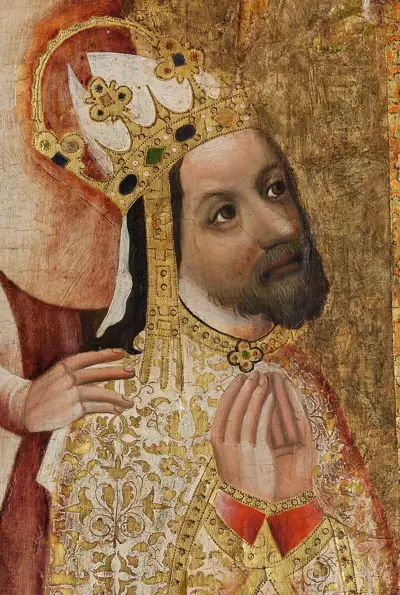
Charles IV, was the first King of Bohemia to become Holy Roman Emperor. He was a member of the House of Luxembourg from his father's side and the Czech House of Přemyslid from his mother's side; he emphasized the latter due to his lifelong affinity for the Czech side of his inheritance, and also because his direct ancestors in the Přemyslid line included two saints.
