John Jay Quotes
Whenever, and from whatever causes, it might happen; and happen it would, that any one of these nations or confederacies should rise on the scale of political importance much above the degree of their neighbors, that moment would those neighbors behold her with envy and fear.
John Jay, 1745-1829, President of the Continental Congress, Governor of New York (Federalist), U. S. Foreign Secretary, First Chief Justice of the U. S. Supreme Court, The Federalist No. 5
Sourced by: Eigen's Political and Historical Quotations


She and her husband, like many of the "America Firsters", believed that Hitler should be allowed to overrun Europe and Russia.


This was a warning to Saudi Arabia that the United States might seize the oil fields. At the time we were not getting enough oil for domestic needs and the military in Europe and in Vietnam. The King arranged to secretly supply oil to the United States while maintaining to the other Arab countries that it was maintaining the boycott of the West.

In a zero sum system whenever one party gains, the other must lose, and if one loses, the other has a corresponding gain. At other times, legislation was not a zero sum game. Many Congressmen believed that if good legislation would be passed, BOTH parties would benefit as would the country. If poor or no legislation were passed, that would be bad for all.

This was true at the time for most nations and their activities—the world was, and was perceived of, as a zero sum game. But with the modern world, much of international activity is not zero sum. In foreign trade both parties to a transaction might win. In scientific research, a win for one nation increases the benefit from all nations who use that research or build upon it.

Shulamith Bath Shmuel Ben Ari Feuerstein

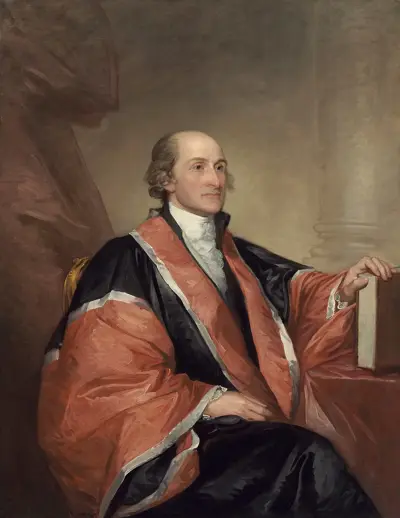
John Jay was an American statesman, patriot, diplomat, Founding Father, abolitionist, negotiator, and signatory of the Treaty of Paris of 1783. He served as the second Governor of New York and the first Chief Justice of the United States (1789–1795). He directed U.S. foreign policy for much of the 1780s and was an important leader of the Federalist Party after the ratification of the United States Constitution in 1788.
