Murad III Quotes
When you turn and proceed against the Spanish infidels with whom you are ever in conflict and strife, with the help of God you will be victorious. Do not refrain from making those who come into your hands food for the sword and targets for the arrow …. We on our side will not be idle; we will at the right time take the necessary measures and harass the Spanish infidels, and we will in any case give you help and assistance. Let it be noted.
A decade earlier the Ottomans had granted the English free trading privileges. See Murad’s 1580 decree.
Murad III, 1546-1595, Ottoman Sultan [Emperor], Letter to Queen Elizabeth of England, June 1590
Sourced by: Eigen's Political and Historical Quotations

This quotation shows The Prophet relaying a message from Allah. This quotation is often used to explain the reason that Islamic nations often support each other regardless of interests, legality, or morality of the position. If the other Muslim nation is a friend of Allah’s, and one opposes the other Islamic nation, then one is not only standing against Allah’s “friend” but Allah himself might make war on you for standing against his friend. So for Islamic nations like Turkey and Pakistan to even be supportive of anti-terrorist activities against Islamic terrorists is a politically, culturally and religiously very difficult thing to do because fundamentalists will cite this quotation and warn that the policy may well be “standing in enmity” against one of Allah’s friends. For most Islamic nations, their religious culture produces a basic instinct to support other Islamic nations against heretics (the Judeo-Christian West or the Hindu-Buddhist East) lest Allah declare war on them.


Burke did not mean that it was a war between Protestants and Catholics. In his time religious war was considered the most terrible of wars because there were virtually non-negotiable principles involved and the passions were so great. The emotional fervor of the French after the French Revolution was extreme in that they were bringing freedom to Europe.

Just like Spain and Persia, the Arabs by fighting lost not only more land, but also lost the respect of most of the non-Muslim War. The conscious decision to choose an irrational strategy that would cause loss of life, land and respect has none-the-less repeatedly been chosen by the Arab culture. much to its detriment. Azzam is one of the few Arabs to admit this to the non-Islamic World.

The first Bishop in Britain, sent by Pope Gregory in 597. This was in large part fulfilled in 607 when Ethelfrith led Saxon troops to Wales killing many including 200 priests who had been sent to pray for the Welsh.


At the time 18 year old Douglas wanted to enlist to fight in the Philippines where his father was about to be given military command. Young Douglas took his father’s prescient advice and attended West Point instead. In an amazing historical precursor, General Arthur MacArthur ended up in policy disputes with the President over how aggressive American tactics should be. President Taft relieved MacArthur of his command.


The meaning is that to be victorious in war one should not be inhibited from doing cruel and brutal things that war sometimes necessitates.


The English were at War with Napoleon and Denmark was neutral. British leaders feared that Denmark might either ally themselves with Napoleon or provide him with ships from their well equipped fleet. The English decided on a preemptive attack on Denmark and Paget and other Captains were ordered to Denmark. When they arrived they were ordered to bombard Copenhagen and force the Danes to surrender. When this happened, the British seized the Danish ships and simply took them as war prizes. The issues of the morality and wisdom of preemptive attacks, as with the Americans in the Iraq war, was thoroughly debated but the government view prevailed to the shame of most Englishmen.

The Christian Armenians, a minority in Turkey and its lands, were discriminated against like other non Muslim minorities in the Ottoman Empire. But during the Turkish War with Russia and WWI, some Armenians defected and served on the Russian side. Many Turkish citizens took revenge on Armenians by means of murder and torture. Soon, the extermination of the Armenians became the official “Young Turk” government policy. Hundreds of thousands of Armenians were killed outright, and about an equal number were “deported” to special areas. Many died of malnutrition along the forced march of Ethnic Cleansing. Others were murdered as they were deported. No one knows exactly how many Armenians were killed with estimates ranging from ½ million to 4 million. This was the first genocide of the 20th century. Modern Turkish leaders however, are in denial about the Armenian deaths. They claim that there was a war and food was scarce; the only Armenians killed, the claimed were proven Russian agents. They further claim that the Armenian behavior was in large part responsible for the forced deportations because of their lack of patriotism and unwillingness to help the Turkish authorities identify the Russian agents. Most Turks today are unaware of the Armenian Genocide as nothing is taught about the massacres in schools or other institutions. It is against the law in Turkey to even have an intellectual study of the Turkish behavior towards the Armenians, much less publish anything about it.


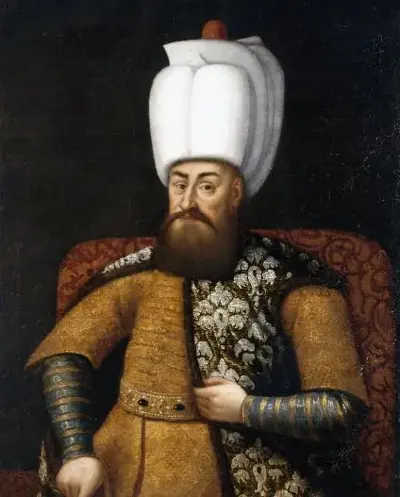
Murad III (Ottoman Turkish: مراد ثالث Murād-i sālis, Turkish: III.Murat) was the Sultan of the Ottoman Empire from 1574 until his death in 1595.
