Alexander Haig Quotes
When you make a threat and do not do it, you lose tremendous credibility globally.
Alexander Haig, 1924–2010, U.S. Secretary of State (Republican), White House Chief of Staff, Army General, Panel Discussion, U. S. State Department, January 28, 1994
Sourced by: Eigen's Political and Historical Quotations


President Obama had publicly drawn a line in the sand stating the Syrian government must not use chemical weapons to put down the revolution and they went ahead and did it anyway. They did turn over all their chemical weapons to coalition forces, but Obama did not order any military or serious economic retribution for having dared to cross the line. The President argued that now that there were no chemical weapons in the hands of the government, the problem was solved. Many, including Gates, thought that this was a big mistake because American foreign policy and military prestige was at stake—that future presidents had diminished credibility because the United States might or might not follow through with their threats. See {642572} for a similar criticism.

See {641688} for a similar criticism of the Obama Syria policy.


Her reference was to the fact that when the Russians invaded Afghanistan in the Cold War, the United States decided to arm and train Islamic fighters to oust the Russians. They did, but then the Mujahideen, as the fighters were called, formed the backbone of Al Qaeda and the Taliban who turned on us.


With promises the success lies in following through and keeping the promise which is usually very costly. A threat that fails meanwhile can be the most expensive thing. We make a threat to deter a foreign power from something. Failure occurs when they are not intimidated and go ahead anyway. Then if we follow through on the threat, that is very costly—a war, a trade embargo, or whatever. Not following through on the threat is the costliest of all as we lose our credibility, trust and honor.

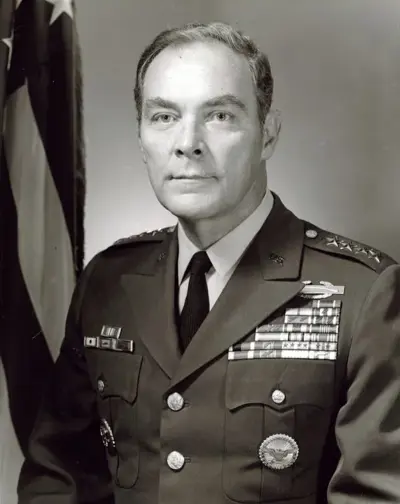
Alexander Meigs Haig Jr. was the United States Secretary of State under President Ronald Reagan and the White House chief of staff under presidents Richard Nixon and Gerald Ford. Prior to these cabinet-level positions, he retired as a general from the United States Army, having been Supreme Allied Commander Europe after serving as the vice chief of staff of the Army.
