Charles Spurgeon Quotes
When thou diest, thy soul will be tormented alone; that will be a hell for it, but at the day of judgment they body will join thy soul, and then thou wilt have twin hells, thy soul sweating drops of blood, and thy body suffused with agony. In fire exactly like that which we have on earth thy body will lie, asbestos-like, forever unconsumed, all they veins roads for the feet of pain to travel on, every nerve a string on which the devil shall forever play his diabolical tune of 'Hell's Unutterable Lament'.
Spurgeon, Charles H. "The Resurrection of the Dead." The New Park Street Pulpit Sermons. Vol. 2, Passmore and Alabaster, 1856, p. 104.

Action he advocated to his followers who attacked and killed pro-slavery advocates in Kansas. The civil war of Kansas was over whether Kansas would enter the Union as a slave state of a free state. If a free state, the free states would be able to block further slavery. If Kansas were to become a slave state, the slave states would have a sufficient majority to make all future expansion hospitable to slavery. The slavery forces started sending man and families into Kansas so that they could vote; the abolitionists did the same. Both sides armed and a war began with each faction trying to kill or drive the other faction out of Kansas before the vote. See {617388} and {612516}.


Depressed by the Union defeat at Fredericksburg in January of 1963, Lincoln observed of the presidency:

This Hadith is said to represent the view of the Prophet, Muhammad. In Islam its authority is second only to the Koran itself. This quotation is given by many Muslim Imams to illustrate that suicide of any kind is contrary to Islam. Therefore these imams condemn suicide bombing as un-Islamic. Others—the terrorists—obviously disagree.


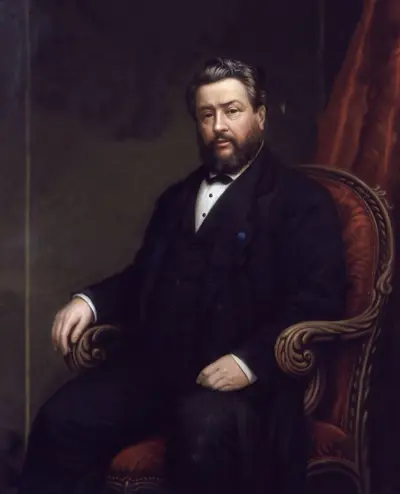
Charles Haddon Spurgeon was an English Particular Baptist preacher. Spurgeon remains highly influential among Christians of various denominations, among whom he is known as the "Prince of Preachers". He was a strong figure in the Reformed Baptist tradition, defending the 1689 London Baptist Confession of Faith, and opposing the liberal and pragmatic theological tendencies in the Church of his day.
