Ryszard Kapuscinski Quotes
When thinking about the fall of any dictatorship, one should have no illusions that the whole system comes to an end like a bad dream… A dictatorship leaves behind itself an empty fields on which the tree of thought won’t grow quickly. It is not always the best people who emerge from hiding.
Ryszard Kapuscinski, 1932–2007, Polish Journalist, Quoted in Adam Hochschild, “Shadowlands”, New York Times Book Review, April 28, 2013
Sourced by: Eigen's Political and Historical Quotations


While the intelligence apparatus of Great Britain and America completely missed the collapse of the Soviet Union, one man, Levin, clearly predicted it. This quotation is from that article.


Vladimir Lenin. The two American leftists had been deported from America. Lenin and the Russian leadership was delighted to have these two famous radicals, and they thought they would find Russia wonderful. But soon the Americans discovered that the freedoms that they found so critical did not, and would not, exist in Communist Russia. After two years, they left Russia for Canada and Europe where they wrote and castigated Communist Russia to the delight of their old American enemies and the shock of many of their old American friends. Lenin was glad to be rid of them. They were as much of a threat to his regime as they were to the United States of the time.


His most influential teacher was the English philosopher and feminist, Annie Besant, 1847-1933. See her quotations for some parallel ideas.

Although he was a Marxist, he was also a democrat. He was one of the first leftists to criticize the Russian Revolution. The letter was widely published. There were few left wing intellectuals who would take Lenin on at the time but Gorter was one.
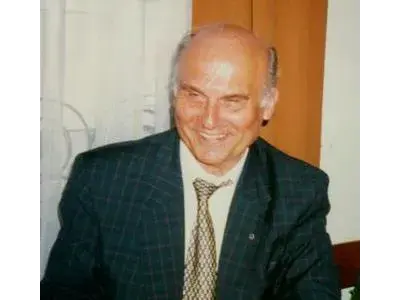
Ryszard Kapuściński was a Polish journalist, photographer, poet and author. He received many awards and was considered a candidate for the Nobel Prize for Literature. Kapuściński's personal journals in book form attracted both controversy and admiration for blurring the conventions of reportage with the allegory and magical realism of literature. He was the Communist-era Polish Press Agency's only correspondent in Africa during decolonization, and also worked in South America and Asia. Between 1956 and 1981 he reported on 27 revolutions and coups, until he was fired because of his support for the pro-democracy Solidarity movement in his native country. He was celebrated by other practitioners of the genre. The acclaimed Italian reportage-writer Tiziano Terzani, Colombian writer Gabriel García Márquez, and Chilean writer Luis Sepúlveda accorded him the title "Maestro".
