Sonita Alizadeh Quotes
When my mother told me they have to sell me, I couldn't breathe; I couldn't speak.
Sonita. Directed by Rokhsareh Ghaemmaghami, Women Make Movies, 2015.


As part of his sermon, Beecher would auction the freedom of a slave girl.


The Chinese laborers were slaves by most definitions of the word as they had been brought to South Africa on a system of indentured servitude. Slavery was illegal so the term had all kinds of political and legal significance. His statement was a masterpiece of admitting that it was almost slavery but leaving some wiggle room so as not to have classified it as such. Some use this as an example of Churchill’s capacity for hypocrisy.

This is one of the major reasons that Slavery was so hard to end in the South. At the time, the dollar value of the Southern slaves was greater than the value of all the land, factories, inventory, and capital equipment of the South. Slaves were not only capital, they were the largest component of Southern capital and Southern wealth. There were numerous ideas of paying slave owners for the freedom of their slaves, and if this was done, it would have been far less expensive in money alone than the Civil War cost. However, the Southern leadership, like Fitzhugh, were totally intransient with culture and customs—indeed the Southern concept of manhood—was dependent in Slavery. The result was that no compensation was paid to slave owners and the South was impoverished as a result of its capital loss and it would not recover for 150 years.
Frank Wisner headed the recruiting effort which began with his personal friends and college chums. No one had any idea of what skills and standards were needed. Actually the WWII OSS (Office of Strategic Services) had a good track record and profiles of good agents, but Director Donovan lost out in the political infighting and was not selected to head the new CIA. Those who ran that agency did not want to do anything that looked like the old OSS so they began by reinventing the wheel.


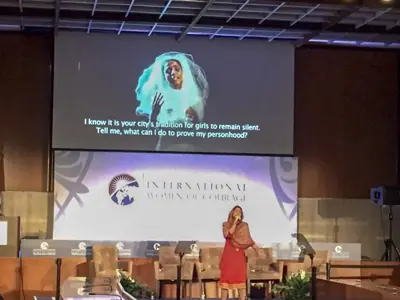
Sonita Alizadeh (Persian: سونیتا علیزاده; born 1996) is an Afghan rapper and activist who has been vocal against forced marriages. Alizadeh first gained attention when she released "Brides for Sale," a video in which she raps about daughters being sold into marriage by their families. With the help of Rokhsareh Ghaem Maghami, an Iranian documentary filmmaker who over three years documented her story in the film Sonita, Alizadeh filmed the video to escape a marriage her parents were planning for her, even though it is illegal for women to sing publicly in Iran, where she was living at the time. After releasing the video on YouTube, Alizadeh was contacted by the Strongheart Group, which offered her a student visa and financial help to come and study in the United States of America, where she then relocated and has resided since. In 2015, she was listed as one of BBC's 100 Women.
