Andrew Neil Quotes
When I went up to Glasgow University in 1967, student life was dominated by 13-hour debates on Fridays, when one of the student political clubs would form the 'government' for the day and attempt to push through a piece of legislation, which the other clubs either supported or opposed.
Neil, Andrew. "Why public schoolboys like David Cameron run Britain." The Telegraph, Telegraph Media Group, 19 Jan. 2011.


The Cloture motion was the motion to terminate the Southern Filibuster against the Civil Rights Act of 1964. Johnson needed substantial Republican support as the Solid Democratic South was all opposed to any kind of civil rights legislation. What is interesting is that Johnson, known as the champion arm twister, knew when to twist and when not to. Mundt, although a serious conservative and generally opposed to the Federal government controlling local human interaction, had also been a school superintendent and was a decent and fair-minded man who was personally offended by the over a century of unfair discrimination and overt racism. Johnson would either have Mundt’s vote from conviction or he would not get it, and pressure was not likely to work with him.


This small booklet was the first describing parliamentary procedures and it rapidly sold 500,000 copies. It has become the bases for legislatures, committees, boards ever since. The Congress and most of the State and local legislatures all are based on it.

The NY legislature was dominated by Republicans at the time.


Despite having passed the House and a majority of the Senate favoring McCain’s bill, a filibuster was led by a few holdouts from his own party. Patiently, McCain assembled sufficient Senate support to break the filibuster.

In the early days of the Senate Filibuster, a senator could hold the floor (and halt all actions) as long as he could continue to speak or 3/5 of the Senate voted to end the filibuster. The filibuster imposed a physical burden on the Senator who chose to use it. Likewise, the other Senators had to be present in sufficient numbers to have a quorum, else the Filibusterer would be able to rest at he did not have to continue to speak if there was not a quorum. The Senate rules were changed to allow a Senator to “announce” a filibuster of a bill, and all action on that bill would stop but there was no burden on the filibustering senator or other senators who had to form the quorum. But in the 112th Congress, the Republicans resorted to more filibusters than there had been in the entire previous history of the Senate and Nelson wanted to return to the old requirement of holding the floor physically.

Things were difficult then, but no where near as bad as in 2008-2012 period where the minority Republicans had more filibusters than all other Senates since the nation began, and their stated purpose was to be sure that no legislation could pass for which President Barack Obama might get credit.

Most American politicians and citizens, unlike DeLay, believe that arguing against the opponents’ political philosophy should be done with debate, civil argument, advocacy, speechmaking and writing and not by attacking opponents and confronting them whenever possible. Later, DeLay was convicted and sentenced to jail for money laundering and illegally spending and raising campaign funds. He was also reprimanded by the House Ethics Committee for unethical methods of fund raising for other earlier actions.

Bolivar was a much greater military freedom fighter for democracy than he was as a democratic civilian leader.


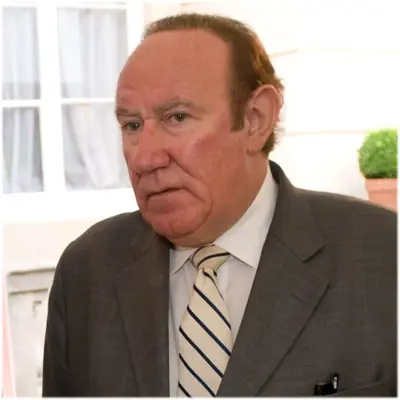
Andrew Ferguson Neil is a Scottish journalist and broadcaster. He serves as chairman of The Spectator and GB News, which will launch in 2021. Neil was appointed editor of The Sunday Times by Rupert Murdoch in 1983, and held this position until 1994. After this he became a contributor to the Daily Mail. He was formerly chief executive and editor-in-chief of Press Holdings Media Group. In 1988 he became founding chairman of Sky TV, also part of Murdoch's News Corporation. He worked for the BBC for 25 years until 2020, fronting various programmes, including Sunday Politics and This Week on BBC One and Daily Politics, Politics Live and The Andrew Neil Show on BBC Two. Since July 2008, he has been the chairman of Press Holdings, whose titles include The Spectator, and ITP Media Group.
