Wole Soyinka Quotes
When I was a child, for a public/civil servant to be caught in corrupt practices, that individual will be a pariah. He will be a complete reject of the society; he/she could not raise his or her voice to speak in the public. So what happened between that time and now? That time when a public officer, prison or customs officer caught in corruption hides his face in shame amongst his peers, he just couldn't come out publicly. Today, when they come back, they get chieftaincy titles, they are received in grand style, cows are killed, they ride on white horses.
Soyinka, Wole. Speech at the Anti-Corruption Summit, Lagos, Nigeria. 2017.

This was a best seller when published in China. It is surprising to many that the Chinese censors even allowed it to be published.


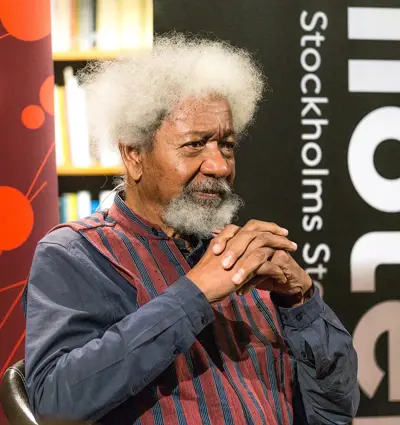
Akinwande Oluwole Babatunde Soyinka, known as Wole Soyinka (pronounced [wɔlé ʃójĩnká]), is a Nigerian playwright, novelist, poet, and essayist in the English language. He was awarded the 1986 Nobel Prize in Literature, the first sub-Saharan African to be honoured in that category. Soyinka was born into a Yoruba family in Abeokuta. In 1954, he attended Government College in Ibadan, and subsequently University College Ibadan and the University of Leeds in England. After studying in Nigeria and the UK, he worked with the Royal Court Theatre in London. He went on to write plays that were produced in both countries, in theatres and on radio. He took an active role in Nigeria's political history and its struggle for independence from Great Britain. In 1965, he seized the Western Nigeria Broadcasting Service studio and broadcast a demand for the cancellation of the Western Nigeria Regional Elections. In 1967, during the Nigerian Civil War, he was arrested by the federal government of General Yakubu Gowon and put in solitary confinement for two years.
