Thomas Schelling Quotes
When I used to theorize about a nuclear standoff, I didn't really have to understand what was happening inside the Soviet Union. It is a lot harder now to build a theory that can encompass all the complications of today's conflicts.
Altman, Daniel, and Edmund L. Andrews. "2 Share Nobel in Economics for Work on Strategy." The New York Times, 11 Oct. 2005, p. C1.


Russia then had designs on Afghani Territory. About a century later, Russia Invaded Afghanistan and tried to impose a communist government. It failed and the Afghans drove out the Russians.

McNamara stated that the Cuban Missile Crisis was more politically required than defense required. The Russians had nuclear missiles at the time that could reach the United States and didn’t really need missiles in Cuba to threaten America. Public opinion and the Republican Political doctrine persuaded President Kennedy that independent of safety and military factors, nuclear missiles in Cuba was a major political problem. See his comment to the President and the Other Officials dealing with the crises—{631968}.


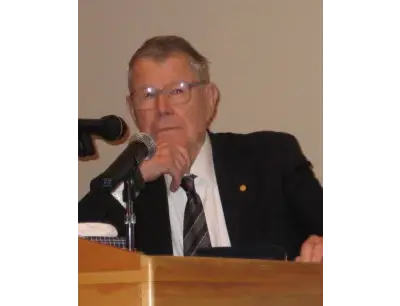
Thomas Crombie Schelling was an American economist and professor of foreign policy, national security, nuclear strategy, and arms control at the School of Public Policy at University of Maryland, College Park. He was also co-faculty at the New England Complex Systems Institute. He was awarded the 2005 Nobel Memorial Prize in Economic Sciences (shared with Robert Aumann) for "having enhanced our understanding of conflict and cooperation through game-theory analysis."
