John Locke Quotes
When I had gone through the whole, and saw what a plain, simple, reasonable thing Christianity was, suited to all conditions and capacities; and in the morality of it now, with divine authority, established into a legible law, so far surpassing all that philosophy and human reason had attained to, or could possibly make effectual to all degrees of man kind; I was flattered to think it might be of some use in the world.
Locke, John. A Second Vindication of the Reasonableness of Christianity. A. and J. Churchill, 1697.


The Judge, a fundamentalist Christian, unilaterally had a large granite monument of the Ten Commandments installed in the Rotunda of the Supreme Court Building. A Federal Judge in deciding a lawsuit ordered him to remove the monument which was held to have been placed there to symbolically uphold the supremacy of the Judeo-Christian tradition in our legal system. Judge Moore appealed to the U. S. Supreme Court which let the removal decision stand. However, the judge still resisted. The other 8 Alabama Supreme Court justices then removed the Chief Justice and ordered the monument removed. Moore who had been selected to office in a “Bible-Belt State,” still blocked the removal forcing a showdown with the Federal Courts and his colleagues in Alabama. Shortly thereafter, both the monument and Judge Moore were removed.

On the Fugitive Slave Act: As one of the leading American Catholic intellectuals during the 19th Century, Brownson’s opinions went far in keeping Catholics from joining the side of the abolitionists. However, just a few years later his tone would change and he would become one of the few Catholic writers to refuse to defend slavery, see {610710}. While the majority of Catholics refused to join the abolition movement, they often did so because abolitionism was closely tied to anti-Catholicism, see Gordon {611392} or Shaftesbury {611106}. Other reasons included Irish immigrants fearful of competition from Black labor and the fear of liberal individualism and social disorder, which was prevalent in 19th century Catholic thought. For a further explanation on the relationship between American Catholics and slavery, see McGreevy {612036}.


Watchtower Bible and Tract Society of New York

This is a very interesting quotation. It is an extreme left winger’s definition that is meant by her to show what is wrong with typical Western philosophy as opposed to that of other cultures. However, almost all “Westerners” would subscribe to her definition and not only be proud of it, but also explain the problem with much of the rest of the world as rejecting these characteristic philosophies.

This is an excellent statement of one of the fundamental principles of many Christian Religious Philosophers.

3rd Earl Russell of Kingston

Marquis de Valdegamas. He was a descendant of the conquistador, Hernando Cortez.


This quotation is one that is quoted very often in discussions of whether the Founding Fathers were divinely inspired.


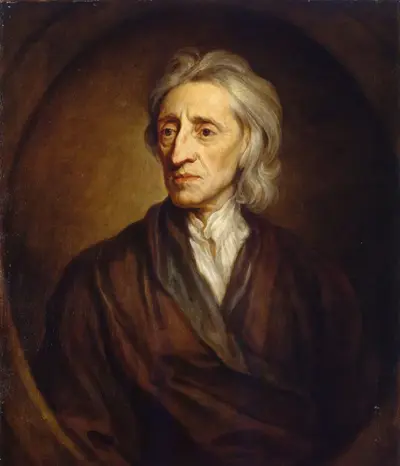
John Locke FRS was an English philosopher and physician, widely regarded as one of the most influential of Enlightenment thinkers and commonly known as the "Father of Liberalism". Considered one of the first of the British empiricists, following the tradition of Sir Francis Bacon, Locke is equally important to social contract theory. His work greatly affected the development of epistemology and political philosophy. His writings influenced Voltaire and Jean-Jacques Rousseau, and many Scottish Enlightenment thinkers, as well as the American Revolutionaries. His contributions to classical republicanism and liberal theory are reflected in the United States Declaration of Independence.
