Andrew Card Quotes
When I first met George W. Bush, I had expected to meet Yale and I got West Texas.
Andrew Card, White House Chief of Staff (Republican), C-SPAN Interview, March 1, 2001
Sourced by: Eigen's Political and Historical Quotations


Shields was specifically discussing reasons for the then estrangement from many countries of the world.

See {618460} for the kinds of statements that stimulated this type of political attack.

The George W. Bush re-election campaign tactics were so polarizing that the two parties would not work together thereafter and little was accomplished at a time when the Bush administration had led the country into terrible problems. Ironically, what seemed like a brilliant re-election for a Republican Administration in retrospect caused an atmosphere where the voters ousted the Republican control margin in 2006, and by the election of 2008, Bush had the lowest approval rating of any President in history, and many historians felt he had become the worst President in American History.

Although there were many irregularities in the 2000 election and many thought that Bush was not the rightful winner, Nadar’s statement is ironic. He entered the race as the Green Party Nominee and siphoned off many more votes from Gore than from Bush. In Florida, the pivotal state, Gore lost by less than 600 votes and but for Nader, Gore would have won and become President. Then for him to later blame Bush’s maneuvers for Gore’s defeat, ignoring his own determinative role struck most observers as the height of selective analysis.


The Type I thinker—one whose intuition is dominant—tends not to be conscious of the mental processes which go into his decision making. He does not analyze and ruminate as the Type II thinker does. See {625103}.

Stark was opposing the George W. Bush ordered Invasion of Iraq and the subsequent Iraq War. “Big George” referred to his father who it is claimed arranged a deferment for George W. in the Vietnam War. George W. Bush had never served in combat but was willing to order others to fight. Most of the strong advocates in the Bush Administration for the Iraq War had never served in the military or seen combat either.


Bush, himself a born-again Christian, made religion in general and fundamentalist Christian values in particular, a major driver of policy making in his administration, subjugating science, medicine, research and social policy to the prevailing views of the evangelical and other fundamentalist Christians. He also claimed that God spoke though him as President. See {589627}.

While this probably was a slip of the tongue, President Bush and governor Perry both had civil right and individual had rights as a lower priority than a individual responsibility, strong growth economy or the military. There were many who really believed that the two men really thought excessive personal reedom a problem that people and the government must be protected from, like freedom for a woman to choose an abortion. For Perry in particular many thought that if this was a slip of the tounge, it was likely a Freudian slip as it what he really wants.

There are many who do not agree with Hayden’s thesis that there was a national consensus about the degree of compromise with Constitutional rights. It is the case that the 3 Presidents maintained a continuity, but there was no great outcry of public opinion for roundups and arrests of Muslims after 9-11. The government never at the time revealed the data on what they were doing. When that became public, it was clear that there was no consensus as was the case with torture. The military authorities who interned American Citizens of Japanese Origin argued that there was little public opposition but many citizens did not even know it was happening, and the ones who did, for the most part, thought that it was only the suspected saboteurs and spies who were interned, not American citizens who were suspected of nothing; not little children; not 90 year old men and women. When the facts were known Americans did form a national consensus—that it was one of the worst practices in which the United States ever engaged.
This is a statement that was meant as a criticism but would be interpreted by many Americans as just a straight forward description. Many believe that is the way it should be.

As Vice President, George W. Bush represented the U. S. at the funerals of many foreign dignitaries:
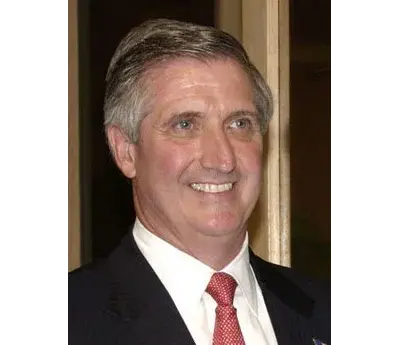
Andrew Hill Card Jr. is an American politician and academic administrator who was White House Chief of Staff under President George W. Bush from 2001 to 2006, as well as head of Bush's White House Iraq Group. Card served as United States Secretary of Transportation under President George H. W. Bush from 1992 to 1993.
