Malala Yousafzai Quotes
When God created man and woman, he was thinking, 'Who shall I give the power to, to give birth to the next human being?' And God chose woman. And this is the big evidence that women are powerful.
Yousafzai, Malala. Interview with Christiane Amanpour. CNN, 12 Oct. 2013.

Most modern feminists would not agree with this quotation by one of the great early femonists.


Jinnah was a modern Islamist who saw the role of females in a modern context. He, like the Indian Hindu leaders were in a sense products of the West and Western government and education. He would be very surprised that in his Pakistan men can murder their female relatives who they believe have dishonored the family, or that women would not be educated in the Madrassas, or that authorities could sentence a female relative of a man deemed guilty of seduction to be gang raped, but that is what happens in modern Pakistan. Jinnah and many of the early leaders believed that their new government could modernize Islam but the control and influence went the other way. Pakistan became a religiously dominated autocracy rather than the democracy that Jinnah foresaw.


This 12th century observation which appears so obvious has been ignored by the vast majority of Islamic scholars and writers subsequent until modern times, and even then they represent the small reform minority of Islamic thinking.


Some modern Islamic scholars have attempted to make this Sura more acceptable by arguing that the size of the stick with which the man may beat the “disobedient” wife should be limited. The contemporary argument concentrates on the size of the stick. There are also a few fundamentalist Christians who advocate the right of a husband to beat his wife on the grounds that this was accepted in Biblical times.
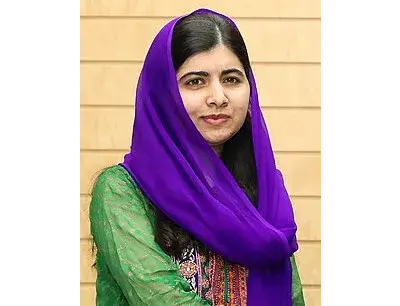
Malala Yousafzai, often referred to mononymously as Malala, is a Pakistani activist for female education and the youngest Nobel Prize laureate. She is known for human rights advocacy, especially the education of women and children in her native Swat Valley in Khyber Pakhtunkhwa, northwest Pakistan, where the local Pakistani Taliban had at times banned girls from attending school. Her advocacy has grown into an international movement, and according to former Pakistani Prime Minister Shahid Khaqan Abbasi, she has become "the most prominent citizen" of the country.
