Sinclair Lewis Quotes
When Fascism comes to America, it will be wrapped in the American flag and carrying a cross.
Ironically, the fascist organizations that did form in America did just that. The American Firsters claimed patriotism motivated them to support Hitler and Father Coughlin and his fascist movement was his own version of Christianity—one which the Roman Catholic Church was so opposed to that they prohibited him from appearing on the radio with his virulent preaching. He was one of several who “hijacked” American Christianity not unlike the way radical Muslims would later in the century hijack Islam.
Sinclair Lewis, 1885-1951, Author & Nobel Laureate in Literature, Observation after visiting and studying Fascist, Nazi Germany in the 1930’s
Sourced by: Eigen's Political and Historical Quotations

See Huey Long for a similar point of view.


Some major celibrities like Charles Lindbergh were admirers of Hitler and other fascist leaders. There were even some American Fascist Organizations that overtly supported Hitler and Mussolini.


Greece was bitterly divided between left and right. Morrow and others were very critical of policies, practices and corruption of both sides much to the chagrin of our State Department which was siding with the right out of fear of communism.


The Christian Front was one of the network of Fascist organizations established and controlled by “radio priest” Charles E. Coughlin. In 1940 investigative reporter Lawrence Spivak did an expose of the Christian Front and The FBI raided its offices and confiscated many weapons intended for the assassination of people including a dozen members of Congress. See {588482}.
This was the origin of the ultra right wing British Fascistic.

Fascists were variously described as “brown shirts” or “black shirts” at the time.

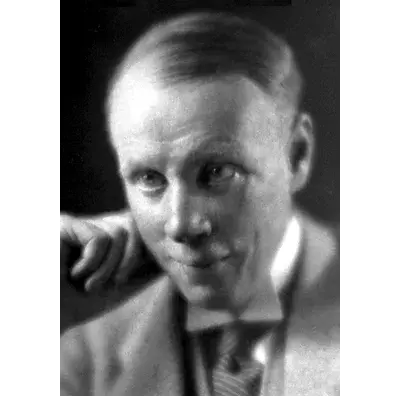
Harry Sinclair Lewis was an American writer and playwright. In 1930, he became the first writer from the United States (and the first from the Americas) to receive the Nobel Prize in Literature, which was awarded "for his vigorous and graphic art of description and his ability to create, with wit and humor, new types of characters." His works are known for their critical views of American capitalism and materialism between the wars. He is also respected for his strong characterizations of modern working women. H. L. Mencken wrote of him, "[If] there was ever a novelist among us with an authentic call to the trade ... it is this red-haired tornado from the Minnesota wilds."
