Arthur Henderson Quotes
In some states militant nationalism has gone to the lengths of dictatorship, the cult of the absolute or totalitarian state and the glorification of war.
Henderson, Arthur. "Essential Elements of a Universal and Enduring Peace." Nobel Lecture, 11 Dec. 1934, Oslo. Nobel Lectures, Peace 1926-1950, edited by Frederick W. Haberman, Elsevier Publishing Company, 1972.


See Huey Long for a similar point of view.


Oswald Mosley was the British Nazi leader who was jailed during much of WWII. There was an obvious and intended similarity to the German Nazi “Brownshirts.” However, the British Nazis wore black shirts. See {591594}.


Ironically, the fascist organizations that did form in America did just that. The American Firsters claimed patriotism motivated them to support Hitler and Father Coughlin and his fascist movement was his own version of Christianity—one which the Roman Catholic Church was so opposed to that they prohibited him from appearing on the radio with his virulent preaching. He was one of several who “hijacked” American Christianity not unlike the way radical Muslims would later in the century hijack Islam.


This was the origin of the ultra right wing British Fascistic.
Evelyn John St. Loo Strachey

Incredibly enough, Gils Robles was only right of center with outright Fascist Nazi groups active in Spanish politics. One of the propaganda myths of the Spanish right at the time was that the poor economy and the Basque and Catalan separatist movements were the result of the activity of the Masons and Jewish influences. Also,Confederacion Espanola, de Derechas Automomas his call for a totalitarian government was typical of the right wing of the time whop distrusted democracy completely.


Both of these famous Americans were admirers of Nazi Germany and Adolf Hitler. They both accepted medals from the German dictator. And both of them were apologists for German aggression and urged the United States not to side with England and to stay neutral in the War. The next year Germany declared war on the United States.

All Spanish newspapers were required to carry this slogan on their mastheads.


Mussolini and the Fascists had been in government for 4 years at this point.

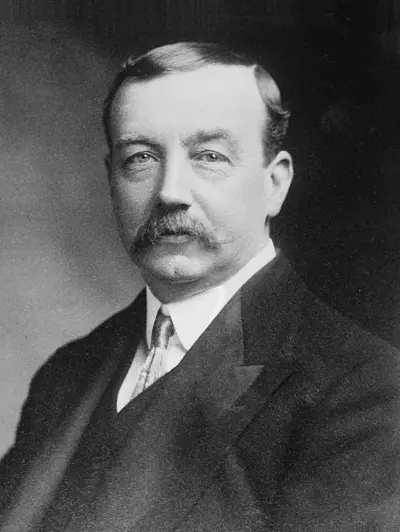
Arthur Henderson was a British iron moulder and Labour politician. He was the first Labour cabinet minister, won the Nobel Peace Prize in 1934 and, uniquely, served three separate terms as Leader of the Labour Party in three different decades. He was popular among his colleagues, who called him "Uncle Arthur" in acknowledgement of his integrity, his devotion to the cause and his imperturbability. He was a transitional figure whose policies were, at first, close to those of the Liberal Party. The trades unions rejected his emphasis on arbitration and conciliation, and thwarted his goal of unifying the Labour Party and the trade unions.
