Karl Pearson Quotes
When every fact, every present or past phenomenon of that universe, every phase of present or past life therein, has been examined, classified, and co-ordinated with the rest, then the mission of science will be completed. What is this but saying that the task of science can never end till man ceases to be, till history is no longer made, and development itself ceases?
Pearson, Karl. The Grammar of Science. Walter Scott, 1892, p. 16.


Most of the greatest scientific breakthroughs were motivated by a search for the truth, a desire to understand the world, and the joy of discovery, not utility. None the less, the results have had profound usefulness to humanity in most cases. After this basic research, there are other people who then specifically work to apply the basic research to improvement in the human condition. That is applied research. Each important basic research breakthrough spawns a host of applications that are then developed.


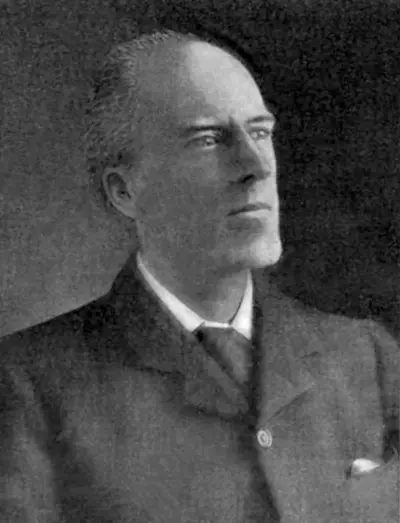
Karl Pearson FRS FRSE was an English mathematician and biostatistician. He has been credited with establishing the discipline of mathematical statistics. He founded the world's first university statistics department at University College, London in 1911, and contributed significantly to the field of biometrics and meteorology. Pearson was also a proponent of social Darwinism, eugenics and scientific racism. Pearson was a protégé and biographer of Sir Francis Galton. He edited and completed both William Kingdon Clifford's Common Sense of the Exact Sciences (1885) and Isaac Todhunter's History of the Theory of Elasticity, Vol. 1 (1886–1893) and Vol. 2 (1893), following their deaths.
