Benjamin Harrison Quotes
When and under what conditions is the black man to have a free ballot? When is he in fact to have those full civil rights which have so long been his in law?
Harrison, Benjamin. "Second Annual Message to Congress." 1 Dec. 1890. Public Papers and Addresses of Benjamin Harrison, Twenty-Third President of the United States, Government Printing Office, 1893.

This was the last public speech that Lincoln made before he was shot.


The large majority of the American people opposed legal segregation and for years, the segregationist, racist, Southern white minority were able to prevent any Civil Rights legislation by using the filibuster until President Lyndon Johnson, formerly a Southern Senator who understood the legislative process better than any other American president used his great skill to pass Civil Rights legislation instead of opposing it which he had done for years as a Texas Senator and the Majority Leader of the Senate.


The president who championed civil rights and voting safeguards did not do so earlier in his career:

Miller was the first Black American admitted to a Graduate Program—Johns Hopkins—in Mathematics. Women were not then universally allowed to vote and suffrage was a major issue. Miller, like many Black males, was opposed to female suffrage. The prospect of many women holding public office was to him so absurd that the potential prospect was sufficient to oppose women voting.


First female presidential candidate & first divorcee to run for that office. The half to which she was referring were the females, who by many narrow laws were unable to participate in the intellectual and political life of the country. At the time, women could not even vote.

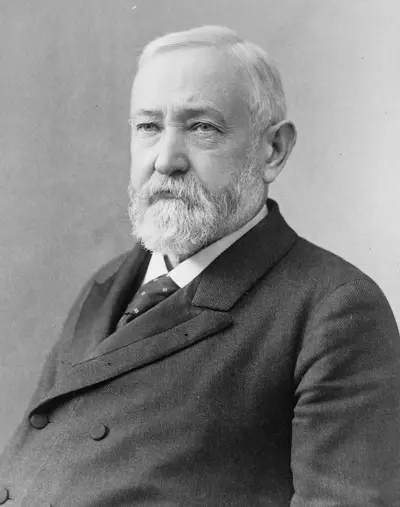
Benjamin Harrison was an American politician and lawyer who served as the 23rd president of the United States from 1889 to 1893. He was a grandson of the ninth president, William Henry Harrison, and a great-grandson of Benjamin Harrison V, a founding father who signed the United States Declaration of Independence.
