Earl Warren Quotes
When an individual is taken into custody or otherwise deprived of his freedom by the authorities in any significant way and is subjected to questioning... He must be warned prior to any questioning that he has the right to remain silent, that anything he says can be used against him in a court of law, that he has the right to the presence of an attorney, and that, if he cannot afford an attorney one will be appointed for him prior to any questioning if he so desires.
Warren, Earl. Miranda v. Arizona, 384 U.S. 436. Supreme Court of the United States, 13 June 1966, p. 478.


This is the classic argument given by those who would deny a defendant the Constitutional protection against self-incrimination. The belief that an innocent man has nothing to fear from the police is refuted by the many cases of innocent men being convicted by evidence they have given in the belief that they were innocent, and served long jail sentences only to later be proved by DNA evidence that they could not possibly have been guilty. Since Nott’s day, society has not only found many cases where honest error was made by the police or prosecutors, but many where there was venal prosecutorial misconduct and defendants were jailed even though the authorities were aware of evidence of innocence and kept it secret. There have been a number of these cases where a defendant was on death row and about to be executed when it was found he was innocent. Probably there have been men wrongly executed. See {629444} for a probable example.


By 2005 trust of many Muslims of the U. S. government had reached such a low point that loyal American Muslim organizations were recommending total non-cooperation with the FBI which had rounded up and held many loyal American Muslims while they were searching for fundamentalist terrorists. President George W. Bush made some very important speeches explaining that all Muslims were not responsible and the FBI worked hard to establish relationships with Muslim leaders and organizations. After a few years many of the roundup practices had stopped but there was a residual of mistrust thereafter.
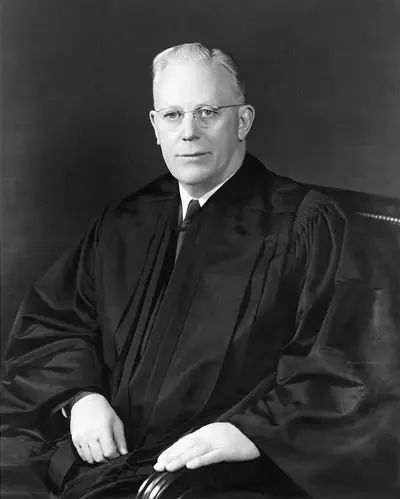
Earl Warren was an American politician and jurist who served as 30th governor of California from 1943 to 1953 and Chief Justice of the United States from 1953 to 1969. The "Warren Court" presided over a major shift in American constitutional jurisprudence, which has been recognized by many as a "Constitutional Revolution" in the liberal direction, with Warren writing the majority opinions in landmark cases such as Brown v. Board of Education (1954), Reynolds v. Sims (1964), Miranda v. Arizona (1966) and Loving v. Virginia (1967). Warren also led the Warren Commission, a presidential commission that investigated the 1963 assassination of President John F. Kennedy. He is the last chief justice to have served in an elected office before entering the Supreme Court, and is generally considered to be one of the most influential Supreme Court justices and political leaders in the history of the United States.
