Max Muller Quotes
Whatever sphere of the human mind you may select for your special study, whether it be language, or religion, or mythology, or philosophy, whether it be laws or customs, primitive art or primitive science, everywhere, you have to go to India, whether you like it or not, because some of the most valuable and most instructive materials in the history of man are treasured up in India, and in India only.
Müller, F. Max. India: What Can It Teach Us?. Longmans, Green, and Co., 1883, p. 15.


The Somnauth Temple was one of the holiest of Hindu shrines in India. It had been attacked, looted, and destroyed several times since its erection before the birth of Christ. A Northern Warlord Ruler had raided the temple and stolen the spectacular gates at the tomb. When the British Indian Army of Indians led by British officers and NCOs, conquered the Warlord area, Lord Ellenborough had the huge gates removed and returned to the Somnauth Temple issuing this proclamation which he arranged to have approved by Queen Victoria and have Parliament vote to return the gates. It was a brilliant historical instance of symbols having enormous political effect. Hindus throughout India, most of whom had forgotten about the stolen temple gates, had the British to thank for righting one of the great wrongs of Hindu history.

“Mussalman” was another name for a Muslim. Jinnah was arguing for a separate Muslim state within India. 7 years later he got is wish and Pakistan was born. However many Muslims chose to remain in India even though it was a majority Hindu state. Jinnah was right for many Muslims and wrong for many others who have integrated into Indian society and there is some intermarriage in India, which has 120 million Muslims, almost as many as Pakistan with 160 million.


Savarkar was a fascist-oriented, Hindu nationalist, who advocated a quasi Hindu theocracy and the relegation of Muslims to second class citizen status. See {641952}.


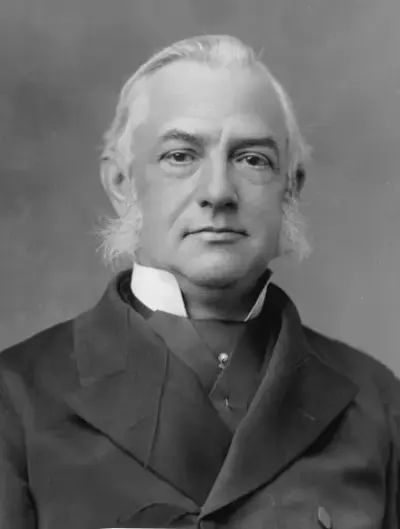
Friedrich Max Müller was a German-born philologist and Orientalist, who lived and studied in Britain for most of his life. He was one of the founders of the western academic disciplines of Indian studies and religious studies ('science of religion', German: Religionswissenschaft). Müller wrote both scholarly and popular works on the subject of Indology. The Sacred Books of the East, a 50-volume set of English translations, was prepared under his direction. He also promoted the idea of a Turanian family of languages.
