Max Muller Quotes
If I were asked under what sky the human mind has most fully developed some of its choicest gifts, has most deeply pondered over the greatest problems of life, and has found solutions of some of them which well deserve the attention even of those who have studied Plato and Kant, I should point to India. And if I were to ask myself from what literature we who have been nurtured almost exclusively on the thoughts of Greeks and Romans, and of the Semitic race, the Jewish, may draw the corrective which is most wanted in order to make our inner life more perfect, more comprehensive, more universal, in fact more truly human a life...again I should point to India
Max Muller, 1823–1900, German Philosopher, Philologist, and Orientalist, India, What can it teach us, 1882
Sourced by: Eigen's Political and Historical Quotations


This propaganda piece turned truth on its head. They claimed the Germans who banned and burned books were lovers and preservers of culture and Jews who, since they were historically banned from certain occupations, tended to concentrate in others including writing, science, painting, and music. This official pamphlet was used in German schools starting in 1934. This propaganda was so effective that by the time the Nazis started the military aggression setting off WWII, the Germans already despised the French, Poles, Russians and other Europeans and were highly anti-Semitic. Americans and others in the world knew about the Catechism but did not believe that such nonsense would be believed by anyone. We have the same reaction today to the propaganda that the Palestinians and some Islamic nations use in their schools teaching hate for America, the Christian West and the Israeli and other Jews.


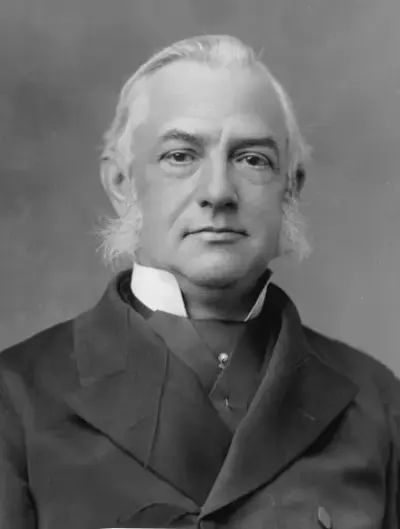
Friedrich Max Müller was a German-born philologist and Orientalist, who lived and studied in Britain for most of his life. He was one of the founders of the western academic disciplines of Indian studies and religious studies ('science of religion', German: Religionswissenschaft). Müller wrote both scholarly and popular works on the subject of Indology. The Sacred Books of the East, a 50-volume set of English translations, was prepared under his direction. He also promoted the idea of a Turanian family of languages.
