William Graham Sumner Quotes
Whatever capital you divert to the support of a shiftless and good-for-nothing person is so much diverted from some other employment, and that means from somebody else. I would spend any conceivable amount of zeal and eloquence if I possessed it to try to make people grasp this idea. Capital is force. If it goes one way it cannot go another. If you give a loaf to a pauper you cannot give the same loaf to a laborer. Now this other man who would have got it but for the charitable sentiment which bestowed it on a worthless member of society is the Forgotten Man.
Sumner, William Graham. "The Forgotten Man." The Forgotten Man and Other Essays, edited by Albert Galloway Keller, Yale University Press, 1918, p. 475.


Colman’s view that business failures contributing to society may be more important than the contributions of the wealthy and successful has been a common theme where failed business men make great politicians (Truman) or failed politicians are appreciated as great philosophers (Paine). This seems to be the first American argument that a failed economic enterprise can have a very beneficial short and/or long term effect on economic development. The failed business could start an entire industry which succeeds later when technology or capital becomes more readily available, or even if implemented by a better manager. Arguably, the California gold rush miners never made any significant money, but their presence changed the economic fact of California. The American airline industry has made little or no money in its history but has enabled development throughout the nation. And the dot com bubble may well have been an economic debacle of the end of the 20th century, but it spurred economic development that has benefited the entire globe.


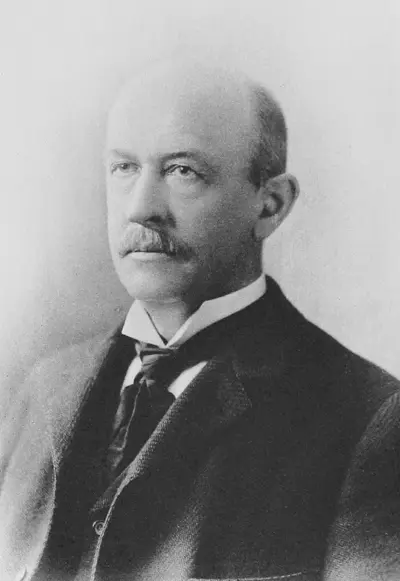
William Graham Sumner was a classical liberal American social scientist. He taught social sciences at Yale, where he held the nation's first professorship in sociology. He was one of the most influential teachers at Yale or any other major school. Sumner wrote widely within the social sciences, with numerous books and essays on American history, economic history, political theory, sociology, and anthropology. He supported laissez-faire economics, free markets, and the gold standard. He adopted the term "ethnocentrism" to identify the roots of imperialism, which he strongly opposed, and as a spokesman against it he was in favor of the "forgotten man" of the middle class, a term he coined. He had a long-term influence on conservatism in the United States.
