Calvin Coolidge Quotes
What we need in appointive positions is men of knowledge and experience who have sufficient character to resist temptations.
Coolidge, Calvin. The Autobiography of Calvin Coolidge. Cosmopolitan Book Corporation, 1929, p. 231.


Sometimes misattributed to Abraham Lincoln, this quote has many forms but Ingersoll appears to have have written the earliest (which was written about Lincoln). Ingersoll’s original quote: “Most people can bear adversity. But if you wish to know what a man really is, give him power. This is the supreme test.”


Leo the Great. Saint Peter was the first head of the Catholic Church—the Pope. Pope Leo observed that the Papacy and the church itself is not permanently diminished just because a particular pope is corrupt or unworthy. This is a principle that has been accepted by most governments regarding their heads of state. A particular bad President for example, does not mean the Presidency is bad.


Before Governor Mecham was impeached, Senator John McCain called for his resignation. After Mecham was impeached for misusing State funds and thwarting investigations of death threats, he commented upon McCain's qualifications for a place on the Republican national ticket:


China, after overthrowing the Manchu Dynasty was struggling among many factions for control of the government. Many of the potential leaders were corrupt.


Presidential assistant Sherman Adams was rumored to have accepted gifts for favors. Adams resigned in disgrace a few months later.

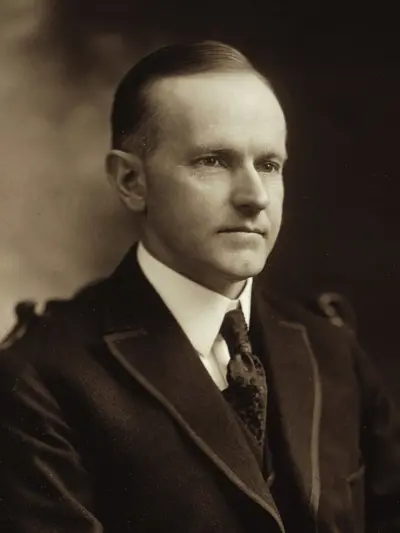
Calvin Coolidge was an American lawyer and politician who served as the 30th president of the United States from 1923 to 1929. A Republican lawyer from New England, born in Vermont, Coolidge worked his way up the ladder of Massachusetts state politics, eventually becoming governor of Massachusetts. His response to the Boston Police Strike of 1919 thrust him into the national spotlight and gave him a reputation as a man of decisive action. The next year, he was elected the 29th vice president of the United States, and he succeeded to the presidency upon the sudden death of Warren G. Harding in 1923. Elected in his own right in 1924, he gained a reputation as a small-government conservative and also as a man who said very little and had a rather dry sense of humor.
