Samuel Gompers Quotes
What shall the workers do? Sit idly by and see the vast resources of nature and the human mind be utilized and monopolized for the benefit of the comparative few? No. The laborers must learn to think and act, and soon, too, that only by the power of organization, and common concert of action, can either their manhood be maintained, their rights to life (work to sustain it) be recognized, and liberty and rights secured.
Samuel Gompers, 1850-1924, President, American Federation of Labor, Letter on labor in industrial society to Judge Peter Grosscup, September 1894
Sourced by: Eigen's Political and Historical Quotations


This statement from an avowed Marxist illustrates the complexity of the Cold War. Marxists and Communists like Pannekoek felt that there had to be a workers’ movement to overcome the capitalist interest in a nuclear arms race. However, they also believed that Russia had botched communism so badly that there could be no workers’ movement in the Soviet Union because of the repression. Only in America they believed could the impetus for disarmament come.


He had squads of thugs that he would “rent” out to other gangsters for their enforcement activities and to unions to protect themselves from goons and intimidate non union workers. However, he would not let his men work as goons and strike busters or for companies—despite huge pay offers—to keep their workers in line, a common practice at the time.


Vladimir Lenin


Roosevelt shocked the conservative members of his own party with this statement. Labor unions were not then an accepted concept in American society. Anti trust legislation and enforcement was in its infancy and companies in an industry commonly conspired as to price fixing, labor negotiations and market share allocations. TR had a scrupulous sense of fairness and equity.

He had been exiled to the United States.


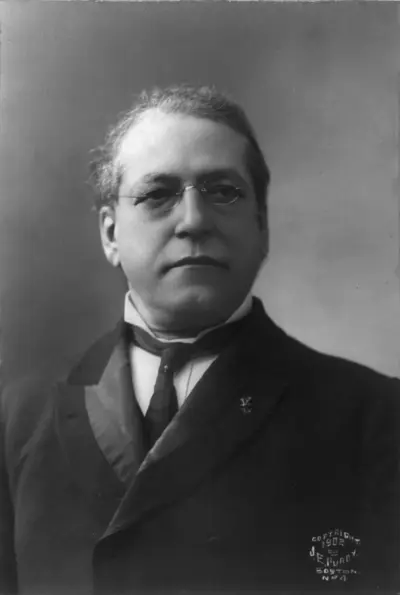
Samuel Gompers was a British-born American cigar maker, labor union leader and a key figure in American labor history. Gompers founded the American Federation of Labor (AFL), and served as the organization's president from 1886 to 1894, and from 1895 until his death in 1924. He promoted harmony among the different craft unions that comprised the AFL, trying to minimize jurisdictional battles. He promoted through organization and collective bargaining, to secure shorter hours and higher wages, the first essential steps, he believed, to emancipating labor. He also encouraged the AFL to take political action to "elect their friends" and "defeat their enemies". He mostly supported Democrats, but sometimes Republicans. He strongly opposed Socialists. During World War I, Gompers and the AFL openly supported the war effort, attempting to avert strikes and boost morale while raising wage rates and expanding membership.
