Stanley A. McChrystal Quotes
What scares me about drone strikes is how they are perceived around the world. The resentment created by American use of unmanned strikes... is much greater than the average American appreciates. They are hated on a visceral level, even by people who've never seen one or seen the effects of one.
McChrystal, Stanley. Interview by David Alexander. Reuters, 7 Jan. 2013.

There was extensive hostility expressed by civilian populations in Pakistan and other countries where the United States made Drone strikes to take out terrorist leaders. However, there was much anti-American feeling in Pakistan before the Drone strikes.
Although the Amerian Drone program did inadvertently kill untargeted or mistakenly targeted civilians at that time, the collateral damage rate was smaller than any other weapons system available to the American forces. War has always produced unintended collateral damage. The only way to stop the killing of innocent civilians then and now is to stop the war.


John E. Puerifoy, the American ambassador to Guatemala

Ironically, one of the major objections to drone strikes is that they have caused civilian casualties.

Executive Order 12333 prohibits political assassinations. The administration took the position that the prohibition did not apply to war where assassination (targeted killing) of enemy leaders is clearly permitted. The problem was that the George W. Bush Administration did not classify the “War on Terror” as a war. They didn’t want to treat captured jihadists as prisoners of war. The Obama administration also would not ask Congress for a Declaration of war, and this caused the moral, ethical, and legal ambiguity that has plagued targeted killings by drones or other means throughout the Afghan and Iraq Wars which were legally not wars.


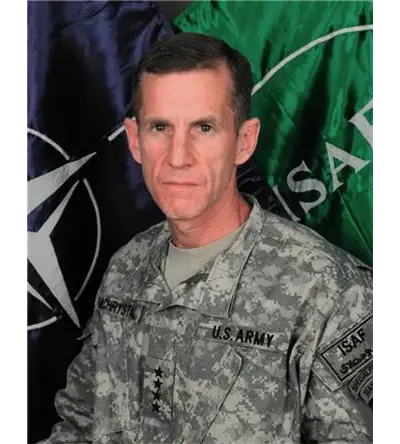
Stanley Allen McChrystal is a retired United States Army general best known for his command of Joint Special Operations Command (JSOC) in the mid-2000s. His last assignment was as Commander, International Security Assistance Force (ISAF) and Commander, United States Forces – Afghanistan (USFOR-A). He previously served as Director, Joint Staff from August 2008 to June 2009 and as Commander of JSOC from 2003 to 2008, where he was credited with the death of Abu Musab al-Zarqawi, leader of Al-Qaeda in Iraq, but also criticized for his alleged role in the cover-up of the Pat Tillman friendly fire incident. McChrystal was reportedly known for saying what other military leaders were thinking but were afraid to say; this was one of the reasons cited for his appointment to lead all forces in Afghanistan. He held the post from June 15, 2009 to June 23, 2010.
