Benjamin Franklin Quotes
What is the Proportion of Freemen possessing Lands and Houses of one thousand Pounds' value, compared to that of Freemen whose Possessions are inferior? Are they as one to ten? Are they even as one to twenty? I should doubt whether they are as one to fifty. If this minority is to choose a Body expressly to control that which is to be chosen by the great Majority of the Freemen, what have this great Majority done to forfeit so great a Portion of their Right in Elections? Why is this Power of Control, contrary to the spirit of all Democracies, to be vested in a Minority, instead of a Majority?
The issue of who should vote in the new United States was a contentious one. Some thought that only people with a certain amount of property should vote because the poor did not have anything to protect. Franklin had even suggested that the House be elected by most men and the Senate by the rich. Actually, for many years Senators were perceived as the representatives of the wealthy compared to the house which represented the common people. The model most people knew then was the English Parliament where the House of Commons represented the common people and the House of Lords represented the nobility which was also an economic aristocracy.
Benjamin Franklin, 1706-1790, Member of the Continental Congress & the Constitutional Convention, Governor of Pennsylvania, President of the Pennsylvania Assembly, U.S. Minister to France, Postmaster General of the American Colonies, Queries and Remarks respecting Alterations in the Constitution of Pennsylvania, 1789
Sourced by: Eigen's Political and Historical Quotations


1st Baron Tweedsmuir


Vladimir Lenin


This was a classic debate over universal male suffrage. Rainborough had made a forceful argument for equality as a spokesperson for the Levellers in this famous debate. Ireton (See {619711}) eloquently gave the classic counter-argument that property owners had much more at stake and therefore should have much more of a say on governmental affairs. Early America actually sided with Ireton but modern America holds with Rainborough.

This was a classic debate over universal male suffrage. Rainborough had made a forceful argument for equality as a spokesperson for the Levellers in this famous debate. See {619710}. Ireton eloquently gave the classic counter-argument that property owners had much more at stake and therefore should have much more of a say on governmental affairs. Early America actually sided with Ireton, but modern America holds with Rainborough.


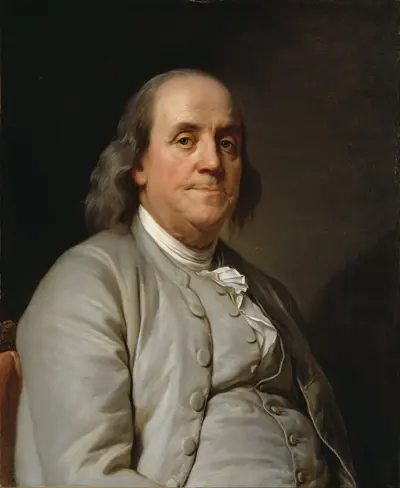
Benjamin Franklin FRS FRSA FRSE was one of the Founding Fathers of the United States. A polymath, he was a leading writer, printer, political philosopher, politician, Freemason, postmaster, scientist, inventor, humorist, civic activist, statesman, and diplomat. As a scientist, he was a major figure in the American Enlightenment and the history of physics for his discoveries and theories regarding electricity. As an inventor, he is known for the lightning rod, bifocals, and the Franklin stove, among other inventions. He founded many civic organizations, including the Library Company, Philadelphia's first fire department, and the University of Pennsylvania.
