Leo Tolstoy Quotes
What is reason given me for, if I am not to use it to avoid bringing unhappy beings into the world!
Tolstoy, Leo. Anna Karenina. Translated by Richard Pevear and Larissa Volokhonsky, Penguin Books, 2000, p. 642.


At the time, condoms and other forms of contraceptives were illegal to buy, sell, possess or own. As late as 1963 a Connecticut druggist was sentenced to jail for filling a doctor’s prescription for condoms and selling them to a married couple even thought the woman might die if she again became pregnant. The Supreme Court (Griswald v. Connecticut) established that a woman had a right to control her own reproductive cycle and the government had no business interfering with a privacy right possessed by a couple. Roe v. Wade established the right to an abortion. The same moral compunctions used with abortion were, and still are used by some to oppose any form of artificial birth control. They argued: preventing a life was as serious a moral failure as taking one. Many Catholics, many evangelical and fundamentalist protestants, and some orthodox Muslims are today morally opposed to birth control and believe that the government should ban birth control as it once was in the United States.

This was the traditional Jewish view of abortion and infanticide. It is the view of the Orthodox Jews of today, but the larger body of Reform Jews, like many Protestant sects, do not equate abortion to murder or infanticide.


This is a very valuable historical quotation as it gives is a flavor of 19th century attitudes about birth control. Malthus was one of the first to warn about the danger of overpopulation. But even he repudiated birth control as a potential solution. Toynbee was giving a scholarly academic lecture and academics whenever they discussed birth control were expected by many to speak or write only in Latin—the “dead language.” Toynbee, a very young brilliant man—he died at only 31—was considered very daring as he actually discussed it in English. The assumption of all at the time, in that Protestant culture, was that birth control was immoral. The logic of it was that sex was pleasurable, but as children would likely result, the parents would have and accept responsibility. Pleasure without the concomitant responsibility might lead to sex for pure enjoyment and much time spent with pleasure. The production of children and the responsibility thereof was therefore a break and limitation on the amount of time that people would spend with sex. There was the Protestant work ethic and too much sex would detract from work, prayer, parenting, scholarship, and activities of social responsibility. In America there was a similar cultural view of birth control and even as late as 1963 the criminal law was used to restrict birth control. A Connecticut pharmacist was jailed for filling a doctors prescription for condoms for a married couple where the wife’s life was threatened if she bore another child. The Supreme Court overturned the conviction, but birth control and abortion were conflated. Even today, many of the so called “pro life” organizations not only oppose legal abortion, but they want the government to restrict birth control, though tactically they emphasize the abortion publicly. The English and American family planning advocates like Margaret Sanger were up against these attitudes on which there is stll some controversy into the 21st century.


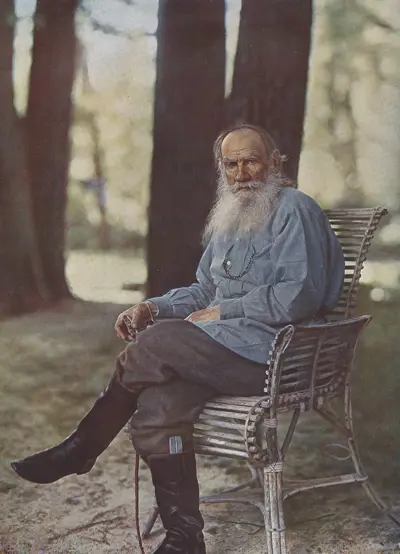
Count Lev Nikolayevich Tolstoy, 9 September, 1828 – 20 November, 1910), usually referred to in English as Leo Tolstoy, was a Russian writer who is regarded as one of the greatest authors of all time. He received nominations for the Nobel Prize in Literature every year from 1902 to 1906 and for the Nobel Peace Prize in 1901, 1902, and 1909. That he never won is a major controversy.
