Mahatma Gandhi Quotes
What is a war criminal? Was not war itself a crime against God and humanity, and, therefore, were not all those who sanctioned, engineered, and conducted wars, war criminals? War criminals are not confined to the Axis Powers alone. Roosevelt and Churchill are no less war criminals than Hitler and Mussolini. England, America and Russia have all of them got their hands dyed more or less red - not merely Germany and Japan.
Gandhi, Mahatma. The Collected Works of Mahatma Gandhi. Vol. 84, Publications Division, Ministry of Information and Broadcasting, Government of India, 1981, p. 118.


Under the Jay Peace Treaty for the American Revolution, the Iroquois were recognized as an Independent Nation. (5 of the tribes fought for the British and 1 for the Colonists which is why the Iroquois were one of the subjects of the peace treaty. In 1942. the Iroquois wanted to maintain their own sovereignty and so they made their own declaration of war in WWII. Then Iroquois men then enlisted in the American Armed Forces. The Iroquois had made their own separate Declaration of War in WWI as well.
This is true. There never has been any International law that made a belligerent responsible for civilian damages and deaths that were the result of collateral damage. However, the United States over the years, more so than any other country. Provided huge amount of aid to the citizens of the enemy nations although there was no legal obligation to do so.

The Second World War was not the first time Germany had committed war crimes and atrocities as a matter of government policy. Hitler and the Nazis then expanded on an evil tradition that was already embedded in the German militaristic culture. See {642193} and {642190} for other examples.


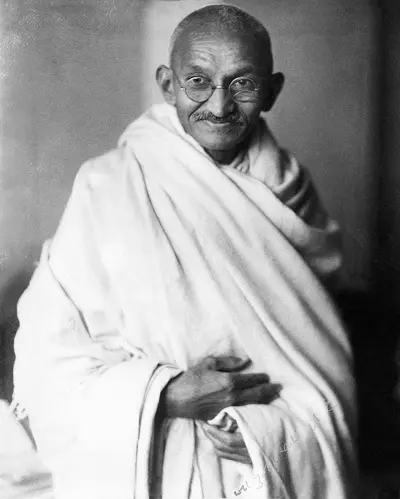
Mohandas Karamchand Gandhi was an Indian lawyer, anti-colonial nationalist, and political ethicist, who employed nonviolent resistance to lead the successful campaign for India's independence from British rule, and in turn inspired movements for civil rights and freedom across the world. The honorific Mahātmā (Sanskrit: "great-souled", "venerable"), first applied to him in 1914 in South Africa, is now used throughout the world.
