Max Hastings Quotes
Unauthorized misdeeds are committed by every army in every war, but in this case the German hierarchy formally endorsed the legitimacy of its soldier’s conduct..
The Second World War was not the first time Germany had committed war crimes and atrocities as a matter of government policy. Hitler and the Nazis then expanded on an evil tradition that was already embedded in the German militaristic culture. See {642193} and {642190} for other examples.
Max Hastings, British Historian & Writer, Observations about the German Atrocities and War Crimes in WWI, Catastrophe: Europe Goes To War 1914, 2013
Sourced by: Eigen's Political and Historical Quotations


See {642191} and {642190} for other examples. The Second World War was not the first time Germany had committed war crimes and atrocities as a matter of government policy. Hitler and the Nazis then expanded on an evil tradition that was already embedded in the German militaristic culture and it from wanton murder to genocide.


There were actually very few incidents of civilian resistance to the German invaders and occupiers. However, they were exaggerated and used as a pretext for what amounted to atrocities and war crimes against the Belgian Civilians.
The German Generals talked him out of the idea, but the quotation gives an insight into the Character of the German Leader. It never occurred to him that the Russians might retaliate and murder German prisoners.


Funston was by modern standards a “war criminal” and “Smith” and “Waller” were two particularly brutal senior officers why had committed even worse war crimes. See {615370}. There was an investigation but the army decided to cover up the crimes lest the extent would become propaganda tools for the enemy. The irony is that Funston had been awarded the Congressional Medal of Honor for bravery earlier in the war. There was an active peace movement at the time (led by Mark Twain among others) and the reaction of the “hawks” to the “doves” was worse than even the Vietnam War.

Turkey, under the control of the triumvirate of the 3 Young Turks had massacred almost all of the Armenian population in the area claimed by Turkey. At the end of WWI, there were many demands that those who ordered the policy of a Turkish genocide and those who carried it out by brought to justice—tried and punished. The Sultan had done little if anything to stop the slaughters although he was very weak, Turkey under the Young Turks had also picked the wrong side and allied with the Germans. The Sultan and his Grand Vizier were trying to pick up the pieces and maintain the Ottoman Empire as best they could despite they the fact that they lost control of much of their vast territory. At the Paris Peace Conference, the Grand Vizier virtually admitted the crimes and committed the Turkish government to determining the guilty and bringing them to justice. He actually had 50 of the worst offenders arrested (See {620595}.). However, there were a few tried and one governor of a province was hanged and a few others received short jail sentences. Talaat, the worst of The Young Turks regarding the genocide, escaped to Germany. But he was tracked by a surviving Armenian who assassinated Talaat. The assassin was acquitted by a sympathetic German court which ruled that the extermination of the assassin’s family had been so traumatic that temporary insanity relieved the assassin of criminal responsibility.

Germany had invaded and occupied much of Europe. These two fronts accounted for the majority of the German casualties. The Germans not only violated the Geneva Convention and the Laws of War repeatedly, but as you can see from this quotation, it was deliberate policy. Keitel was tried and hanged after the war. See {621438} .

The Lusitania was an American passenger liner that was torpedoed by the German U-Boats. Edith Cavell was a British nurse who was assisting all wounded in Belgium, and Captain Charles Fryatt, was an English Merchant Captain who when his ship was attacked by a German submarine, fought back and rammed and sank the sub. In each case the German behavior was contrary to the then norms of civilized warfare.


The Germans had comitted some terrible war crimes in Belgium at the begiining of WWI. They had torpedoed passanger ships with some Americans getting killed, Public opinion was such that Wilson worried that some atrocity by any small german detachment could pressure his administration to enter WWI to satisf American public opinion.


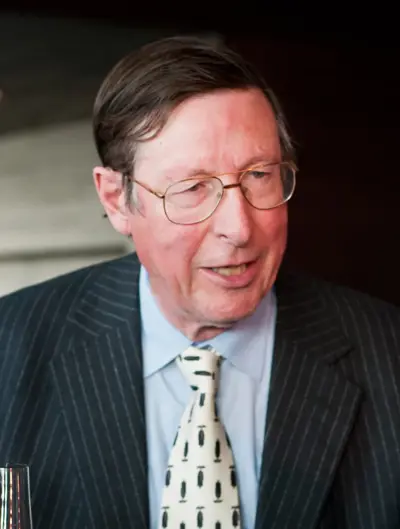
- Born: December 28, 1945
- Nationality: British
- Profession: Journalist, Editor, Author
Sir Max Hugh Macdonald Hastings FRSL FRHistS is a British journalist and military historian, who has worked as a foreign correspondent for the BBC, editor-in-chief of The Daily Telegraph, and editor of the Evening Standard. He is also the author of numerous books, chiefly on defence matters, which have won several major awards. Hastings currently writes a bimonthly column for Bloomberg Opinion.
