Seneca the Younger Quotes
What if a man save my life with a draught that was prepared to poison me? The providence of the issue does not at all discharge the obliquity of the intent. And the same reason holds good even in religion itself. It is not the incense, or the offering that is acceptable to God, but the purity and devotion of the worshipper.
Seneca, Lucius Annaeus. Seneca's Morals by Way of Abstract. Translated by Sir Roger L'Estrange, Harper & Brothers, 1846, p. 18.


This argument, condemned by many Englishmen, was essentially, it is moral to do whatever you God made you able to do a principle that was refuted in Christianity, Judiasm and most other religions. See {620562} for Clinton’s history of white encouragement of Indian scalping.


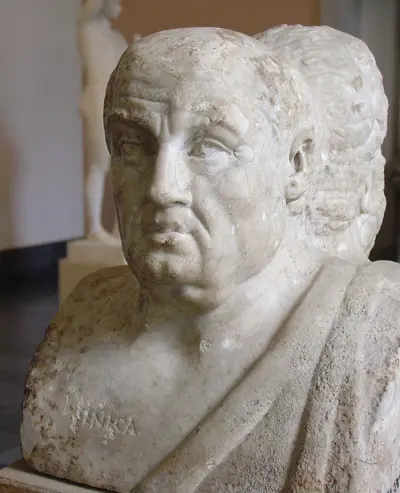
Lucius Annaeus Seneca the Younger (/ˈsɛnɪkə/; c. 4 BC – AD 65), usually known as Seneca, was a Roman Stoic philosopher, statesman, dramatist, and in one work, satirist from the Silver Age of Latin literature.
