Hugo Black Quotes
What finally emerges from the 'clear and present danger' cases is a working principle that the substantive evil must be extremely serious and the degree of imminence extremely high before utterances can be punished...It must be taken as a command of the broadest scope that explicit language, read in the context of a liberty-loving society, will allow.
Black, Hugo. Bridges v. California, 314 U.S. 252. Supreme Court of the United States, 1941, p. 263.


Referring to the tactics of anti-abortion activists blocking the entrances of abortion clinics:
Striking down a law making cross burning a crime:

In WWI Congress had passed a law that prohibited anyone from undermining or interfering with the war effort. The defendants had passed out anti-war literature to young men heading for military service. The court then overlooked the First Amendment and came up with a strange logic where the “clear and present danger” was the test of whether the First Amendment would apply. The anti war pamphleteers went to jail. Today, we look back on this and find it very surprising but this is yet another example of erosion of freedom and civil liberties when the nation is at war. By the 1950s, the Supreme Court had reversed itself and the First Amendment was restored to its original intent.


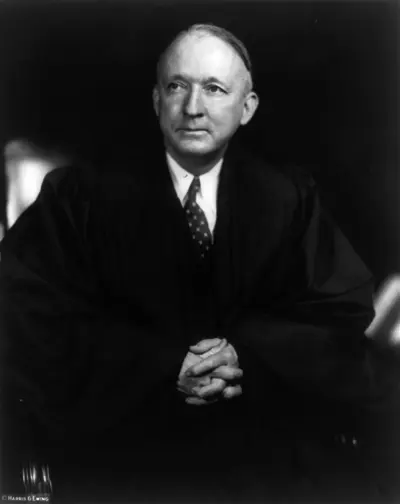
Hugo Lafayette Black was an American lawyer, politician, and jurist who served as a U.S. Senator from 1927 to 1937 and as an Associate Justice of the Supreme Court of the United States from 1937 to 1971. A member of the Democratic Party and a devoted New Dealer, Black endorsed Franklin D. Roosevelt in both the 1932 and 1936 presidential elections. Having gained a reputation in the Senate as a reformer, Black was nominated to the Supreme Court by President Roosevelt and confirmed by the Senate by a vote of 63 to 16 (six Democratic Senators and 10 Republican Senators voted against him). He was the first of nine Roosevelt appointees to the Court, and he outlasted all except for William O. Douglas.
