Mary McLeod Bethune Quotes
What does the Negro want? His answer is very simple. He wants only what all other Americans want. He wants opportunity to make real what the Declaration of Independence and the Constitution and the Bill of Rights say, what the Four Freedoms establish. While he knows these ideals are open to no man completely, he wants only his equal chance to obtain them.
Bethune, Mary McLeod. "Certain Unalienable Rights." What the Negro Wants, edited by Rayford W. Logan, University of North Carolina Press, 1944, p. 248.


This verse is inscribed on the Liberty Bell and the Statue of Liberty base.


Bush, despite statements like this, polarized America on the race issue. Most of the racists and people who believed in segregation supported Bush, while few Blacks and liberals did.


Most politicians at the time agreed with this statement. In the next 25 years, the economic system grew less fair and when government officials tried to come up with remedies, they sublimated fairness, to economic recovery, and America went through a phase where fairness was far less important then it traditionally had been.


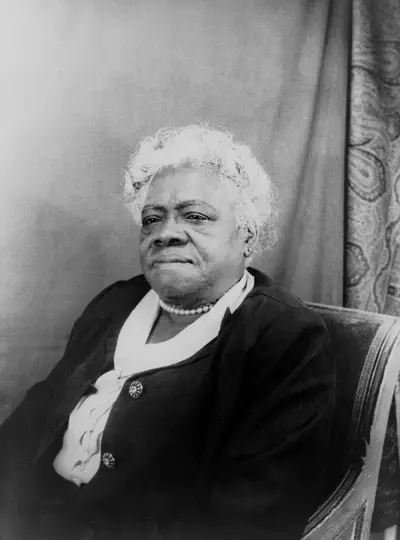
Mary Jane McLeod Bethune was an American educator, stateswoman, philanthropist, humanitarian, womanist, and civil rights activist. Bethune founded the National Council for Negro Women in 1935, established the organization's flagship journal Aframerican Women's Journal, and resided as president or leader for myriad African American women's organizations including the National Association for Colored Women and the National Youth Administration's Negro Division. She also was appointed as a national adviser to president Franklin D. Roosevelt, whom she worked with to create the Federal Council on colored Affairs, also known as the Black Cabinet. She is well known for starting a private school for African-American students in Daytona Beach, Florida; it later continued to develop as Bethune-Cookman University. Bethune was the sole African American woman officially a part of the US delegation that created the United Nations charter, and she held a leadership position for the Women's Army Auxiliary Corps. For her lifetime of activism, she was deemed "acknowledged First Lady of Negro America" by Ebony magazine in July 1949 and was known by the Black Press as the "Female Booker T. Washington". She was known as "The First Lady of The Struggle" because of her commitment to gain better lives for African Americans.
