August Strindberg Quotes
What an occupation! To sit and flay your fellow men and then offer their skins for sale and expect them to buy them.
Strindberg, August. Quoted in Strindberg: A Biography, by Michael Meyer, Random House, 1985, p. 220.


The Greeks committed many atrocities in their war with Turkey. See {584483}

This quotation is typical of the anti-Semitic view of the World that is held by many Islamic fundamentalists. Saudi Arabia promulgates this type of venom throughout the Muslim World. This, along with diatribes like it, are recorded in video and audio tape, and with the permission of the Saudi Arabian government if not with government funds.


The “lords of the lash” were the Southern slave owners. The “lords of the loom” were the Northern mill owners. The Southern cotton, grown by cheap slave labor was sold to the Northern mill owners at very low prices. They in turn wove the cotton into cloth and sold it throughout the nation and to foreign countries. So, although there was strong Northern anti-slavery sentiment, the wealthy and politically powerful mill owners had a vested interest in maintaining slavery in the South.
As a British Loyalist officer, he and his men were dispatched to Savannah, Georgia. There he saw the Southern version of slavery for the first time and was shocked at the cruelty. At the end of the Revolutionary war, he and many other loyalists fled to Canada and began his political career, then representing Britain in the Caribbean. See also {591379}.
None was forthcoming. This letter is of great historical interest in that it shows the corrupting influence of slavery on all facets of society.

The Pope was justifying his earlier excommunication of Holy Roman Emperor Henry IV who in turn excommunicated Pope Gregory.

The language was removed in the negotiations that followed Jefferson's draft.


This quotation so impressed Thomas Jefferson that he wrote it in his Commonplace Book.


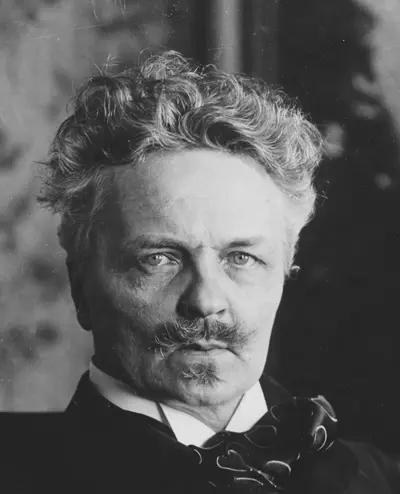
Johan August Strindberg (/ˈstrɪn(d)bɜːrɡ/, Swedish: [ˈǒːɡɵst ˈstrɪ̂nːdbærj] (listen); 22 January 1849 – 14 May 1912) was a Swedish playwright, novelist, poet, essayist and painter. A prolific writer who often drew directly on his personal experience, Strindberg's career spanned four decades, during which time he wrote more than sixty plays and more than thirty works of fiction, autobiography, history, cultural analysis, and politics. A bold experimenter and iconoclast throughout, he explored a wide range of dramatic methods and purposes, from naturalistic tragedy, monodrama, and history plays, to his anticipations of expressionist and surrealist dramatic techniques. From his earliest work, Strindberg developed innovative forms of dramatic action, language, and visual composition. He is considered the "father" of modern Swedish literature and his The Red Room (1879) has frequently been described as the first modern Swedish novel.
