Oliver Stone Quotes
We've used the power that we have had to listen in to everybody so that we could better promote our agenda
He was referring to the power of the United States in cyber to hack into the computers, e-mail and phones of foreign leaders. Many other americans wouod argue that a more imoiortant reason to consuct this kind of surveiulance was to obtain warnings about dangers to America and/or Americans abroad. Still ohters wold agree with Atone but unlike Sone who feels that this is morally and politically wrong, they think that there is noting wrong with us using our power to promote the Amercian agenda. There has always been a part of America that was evengelical for the free democracy with civil rights protected even from government that America uniquely developed. And then there are some American wold be imperialists. This is an issue on which Americans have desagreed since our founding.
Oliver Stone Interview, The Tavis Smiley Show December 21, 2016
Sourced by: Eigen's Political and Historical Quotations


The first non-PRI President in over 70 years.


While it is true that almost all nations have intelligence agencies and collect intelligence about both friends and foes, our allies did not bug the personal phones of leaders of friendly countries and were very distressed when they discovered that the US NSA had access to the personal calls of world leaders including the leaders of Brazil, Germany and France. Rubio and others believed that they only reason our allies had not done so is that they did not have the technical capability to do so; otherwise they would have been bugging our Presidential and cabinet level phones. President Obama ordered the practice stopped with respect to our allies.

Major leaks made public the fact that the NSA was hacking into the European and other foreign servers of Google, Microsoft and other technology companies and vacuuming up 500 million internet communications every day. (It would be illegal for them to do this in the United States, but via the outside USA servers they capture the information of US Citizens sending E-mail within the United States. The reaction of many foreign government was outrage as their citizen’s private communications were being captured as well. They began to take steps to curtain their country’s high utilization of American company data storage and transmission and regulate the American firms much more extensively. So American company business and profits were damaged by the NSA surveillance programs which the companies did not know about.


He was the Chairman of the Senate Judiciary Committee. The NSA had hacked into the servers of these firms and others that were located out of the country. (They would need to have a warrant if inside the country.) The companies had never known it until Edward Snowden made this practice public. The result was, the public was learning that there was no privacy in any of their e-mail, social media activity, exchange of photos or videos or anything else. The companies feared that this would then harm their business, and that the techniques NSA used to hack there servers would then be discovered and used by others to steal identities, credit cards and do such other damage to customers. Even if the particular hacking methods were not leaked to the bad guys, they, knowing that the servers were vulnerable, would be encouraged to work to figure it out.
He was the Chairman of the Senate Judiciary Committee.
He was the Chairman of the Senate Judiciary Committee. The Islamic fundamentalist terrorists are repugnant to us because they have no respect for Civil and Human Rights and would deny us what we value so highly and for which so many Americans have sacrificed. We are little better off if we surrender our civil rights in order to cope with the problem of losing our civil rights to the likes of the Taliban and Al Qaeda.

Snowden, was a contract worker for Booz Allan assigned to the National Security Agency (NSA). He felt that some of the NSA activities were illegal and unethical and tried to complain to NSA officials who rebuffed him. Despite the fact that he had signed an agreement not to do so, he copied many critical, classified documents that exposed much of the NSA activities that the NSA officials had denied existed—including lying under oath to the Senate. He then made many of them public, violating his oath, breaking the law, and opening up an entire area of government spying which most Americans knew nothing about and about which senior government officials had lied under oath to Congress. They of course wanted to prosecute Snowden who had told the truth, while they had lied. For many Americans, this became a moral and ethical conundrum.
Snowden, was a contract worker for Booz Allan assigned to the National Security Agency (NSA). He felt that some of the NSA activities were illegal and unethical and tried to complain to NSA officials who rebuffed him. Despite the fact that he had signed an agreement not to do so, he copied many critical, classified documents that exposed much of the NSA activities that the NSA officials had denied existed—including lying under oath to the Senate. He then made many of them public, violating his oath, breaking the law, and opening up an entire area of government spying which most Americans knew nothing about and about which senior government officials had lied under oath to Congress. They of course wanted to prosecute Snowden who had told the truth, while they had lied. For many Americans, this became a moral and ethical conundrum.

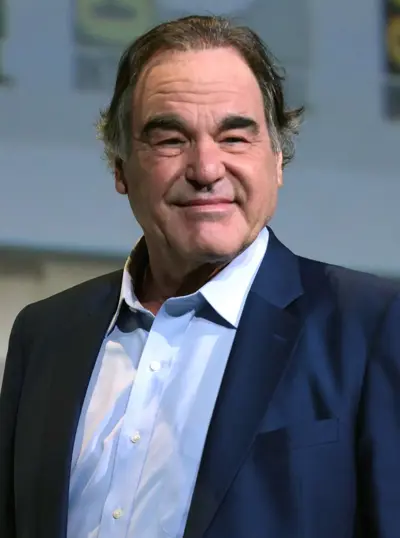
William Oliver Stone is an American film director, producer, and screenwriter. Stone won an Academy Award for Best Adapted Screenplay as writer of Midnight Express (1978), and wrote the gangster movie remake Scarface (1983). Stone achieved prominence as writer and director of the war drama Platoon (1986), which won Academy Awards for Best Director and Best Picture. Platoon was the first in a trilogy of films based on the Vietnam War, in which Stone served as an infantry soldier. He continued the series with Born on the Fourth of July (1989)—for which Stone won his second Best Director Oscar—and Heaven & Earth (1993). Stone's other works include the Salvadoran Civil War-based drama Salvador (1986); the financial drama Wall Street (1987) and its sequel Money Never Sleeps (2010); the Jim Morrison biographical film The Doors (1991); the satirical black comedy crime film Natural Born Killers (1994); a trilogy of films based on the American Presidency: JFK (1991), Nixon (1995), and W. (2008); and Snowden (2016).
