Patrick Leahy Quotes
If we give the impression that every one of our technological advances in this country, be it Microsoft, Google, Yahoo or anything else, are really an instrument of our intelligence agencies, how far do you think they are really going to go?
He was the Chairman of the Senate Judiciary Committee. The NSA had hacked into the servers of these firms and others that were located out of the country. (They would need to have a warrant if inside the country.) The companies had never known it until Edward Snowden made this practice public. The result was, the public was learning that there was no privacy in any of their e-mail, social media activity, exchange of photos or videos or anything else. The companies feared that this would then harm their business, and that the techniques NSA used to hack there servers would then be discovered and used by others to steal identities, credit cards and do such other damage to customers. Even if the particular hacking methods were not leaked to the bad guys, they, knowing that the servers were vulnerable, would be encouraged to work to figure it out.
Patrick Leahy, U.S. Senator (Democrat, VT), Interview, C-SPAN Newsmakers, November 17, 2013
Sourced by: Eigen's Political and Historical Quotations


He was trying to assuage the anger and anxiety when it became public that the NSA had been monitoring all the calls of American citizens and not only suspected terrorists. He made the distinction between metadata and content. He claimed NSA was gathering the phone numbers of the parties on the call, the time and duration, but not listening in to the contents. Critics asked how he could be sure and that if the agency were gathering all the data, they could easily listen to any. Later the agency admitted that it had “inadvertently” examined the content of some communications.

Snowden, was a contract worker for Booz Allan assigned to the National Security Agency (NSA). He felt that some of the NSA activities were illegal and unethical and tried to complain to NSA officials who rebuffed him. Despite the fact that he had signed an agreement not to do so, he copied many critical, classified documents that exposed much of the NSA activities that the NSA officials had denied existed—including lying under oath to the Senate. He then made many of them public, violating his oath, breaking the law, and opening up an entire area of government spying which most Americans knew nothing about and about which senior government officials had lied under oath to Congress. They of course wanted to prosecute Snowden who had told the truth, while they had lied. For many Americans, this became a moral and ethical conundrum.

In 1967 Cunningham headed a CIA study group reviewing U. S. Intelligence operations.

See {635177} for the event that triggered the statement.


We tend to be hard on our intelligence agencies for a combination or reasons. Because much of their activity is secret and many of their successes are not known to the public. If they have a great success, the politicians generally take the credit. But if the intelligence agency makes a big error that causes a failure of some kind, a the politicians often violate the secrecy and blame the intelligence agencies. The Iraq Invasion of the George W, Bush administration was a good example. The President had received intelligence that Iraq was developing nuclear weapons. He invaded to prevent their being used. It turned ouit that there were no nuclear weapons at all, and the President and leaders of hs cabinet had misled, the people, the Congress, the UN and world opinion and started a war on false pretenses. The administration then went public about the intelligence failure. There was a great deal of intelligence that indicated that there were no Iraq nuclear program but these never reached the President, the military or the public. In addition, the intelligence agencies have missed some really major events, like the fall of the Soviet Union or the Chinese Communist victory in the Chinese Civil war. But intelligence is not an exact science; mistakes are inevitable, The politicians using the intelligence tend to think that intelligence estimates are more certaini than estimates can be. However the CIA in particular has had periods of rogue and illegal activities just which cause many citizens ro distrust them. They have illegally investigated Americans, actually conducted experiments with chemical weapons in American cities without any permission or authority, violated American law in the way they treat prisoners,and destroyed evidence, broken the law by conducting activities that Congress and the President had explicitly forbid. The FBI has also broken the law and spied on Americans who were critical of the government, and slandered the reputations of some Americans by “leaking” information that oftn was not even true. So the current intelligence have to bear the burden of their predecessors, but because of the secrecy, cannot take advantage of all the wonderful accomplishments and great sacrifices of many members of the intelligence agencies.

He was the Chairman of the Senate Judiciary Committee.
He was the Chairman of the Senate Judiciary Committee.
Snowden, was a contract worker for Booz Allan assigned to the National Security Agency (NSA). He felt that some of the NSA activities were illegal and unethical and tried to complain to NSA officials who rebuffed him. Despite the fact that he had signed an agreement not to do so, he copied many critical, classified documents that exposed much of the NSA activities that the NSA officials had denied existed—including lying under oath to the Senate. He then made many of them public, violating his oath, breaking the law, and opening up an entire area of government spying which most Americans knew nothing about and about which senior government officials had lied under oath to Congress. They of course wanted to prosecute Snowden who had told the truth, while they had lied. For many Americans, this became a moral and ethical conundrum.
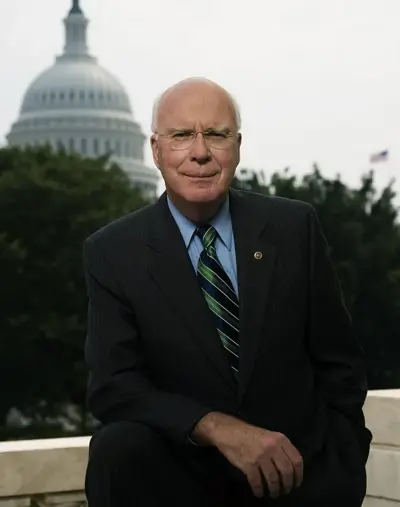
Patrick Joseph Leahy is an American politician and attorney serving as the president pro tempore of the United States Senate, and as the senior United States senator from Vermont. Leahy was first elected to the Senate in 1974, and previously served as president pro tempore from 2012 to 2015. He is the chair of the Senate Appropriations Committee.
